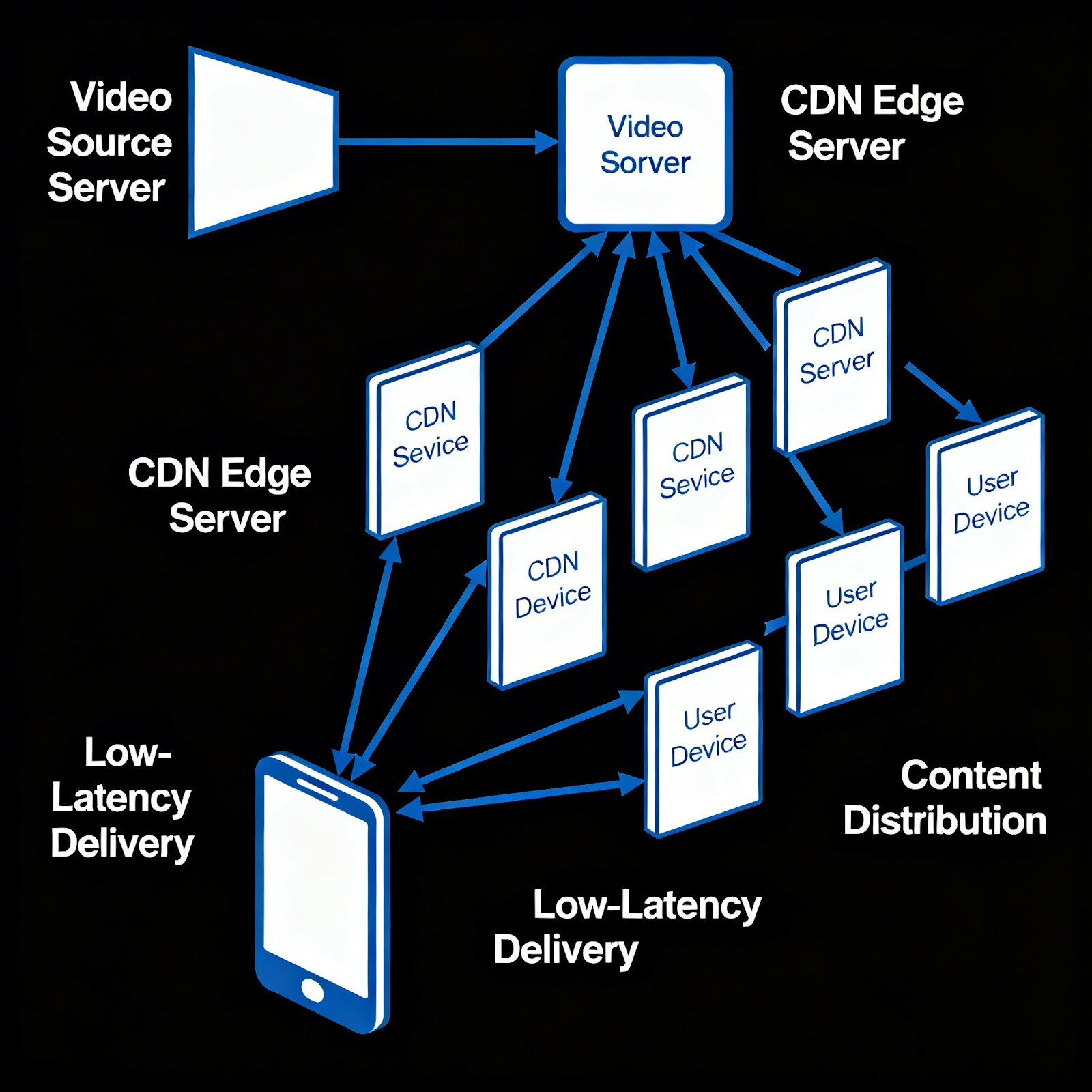
Advantages of Multi-CDN for Video Platforms
Video streaming platforms rarely operate under calm, predictable traffic conditions. A new release can suddenly attract millions of viewers, a viral clip can trigger unexpected spikes, and a single infrastructure issue can cascade into widespread buffering. For platforms delivering video at scale, reliability and performance are core requirements.
Many operators begin with a single, basic CDN to simplify deployment and configuration. However, as platforms grow, a single delivery network can become a limitation rather than a solution. Regional congestion, uneven performance across markets, and dependency on one provider introduce operational risks that are difficult to ignore.
For this reason, many streaming platforms eventually move toward architectures that combine multiple delivery configurations and specialized infrastructure. Platforms that operate high-volume streaming services often use solutions such as a dedicated Video CDN designed specifically for media workloads. You can learn more about how such infrastructure works here:
https://advancedhosting.com/video-cdn/
In this article, we will explore how multi-CDN architectures work, why they are valuable for video delivery, and in which scenarios they provide the greatest operational advantage.
The Limits of a Single CDN
A traditional CDN setup places a single delivery system between viewers and the origin infrastructure. In many situations, this works well, especially for websites and smaller video platforms.
However, video workloads introduce very different operational characteristics.
First, streaming traffic is extremely sensitive to latency and throughput fluctuations. Even small network inconsistencies can cause buffering or bitrate drops.
Second, video traffic is often highly concentrated. When thousands of viewers request the same segments simultaneously, caching efficiency becomes critical. If a CDN node becomes overloaded or poorly routed, the impact is immediately visible to viewers.
Third, geographic performance varies widely. A CDN that performs well in North America may show weaker latency in parts of Asia or South America. When a platform serves a global audience, these regional differences become noticeable.
Finally, relying on a single configuration creates operational vulnerability. If the system experiences routing issues, outages, or regional capacity constraints, the platform has few options for mitigation.
A multi-CDN architecture addresses these limitations by introducing flexibility into the delivery layer.
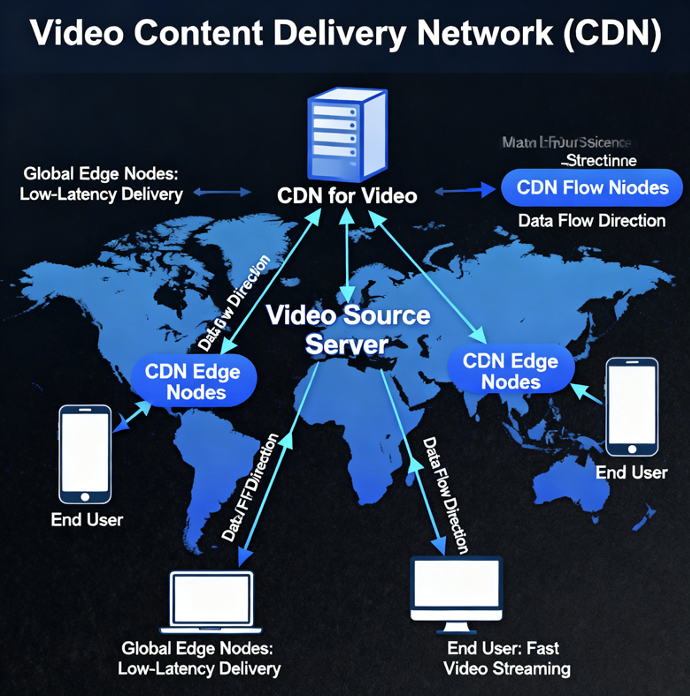
What a Multi-CDN Architecture Actually Means
A multi-CDN setup can select the delivery configuration to use instead of routing all requests through a single one.
Traffic distribution can be implemented using several methods:
- DNS-based traffic steering
- Real-time performance monitoring
- Geographic routing policies
- Application-level load balancing
In practice, the platform continuously evaluates where to route requests. If one CDN shows higher latency or errors in a region, traffic can be redirected to another one.
The result is a more adaptive delivery system that reacts to real-world network conditions. Instead of assuming a single CND type is always optimal, the platform dynamically selects the best path for each user request.
Improved Reliability and Redundancy
One of the most immediate advantages of a multi-CDN architecture is operational resilience. The objective is not simply to survive outages, but to minimize their disruption to users, revenue streams, and operational workflows when they occur.
In a single-CDN setup, routing failures, regional congestion, or infrastructure incidents can immediately affect viewer experience. Even a partial disruption can cause buffering, failed playback attempts, or sudden traffic spikes on the origin infrastructure.
A multi-CDN environment limits operational exposure by dynamically redistributing traffic across different delivery paths. Instead of relying on a single provider to recover, the platform can automatically shift requests to alternative delivery networks that remain healthy.
Key reliability advantages include:
Traffic can be redirected in real time when one delivery path degrades or fails
Regional outages remain isolated instead of affecting the entire audience
Playback sessions can continue through an alternate delivery infrastructure
Operations teams retain granular control over routing and failover policies
For platforms delivering live events, sports streams, or premieres, this approach significantly reduces the operational impact of infrastructure incidents. Instead of a full-service disruption, failures are contained, and traffic continues to flow through the most stable available path.
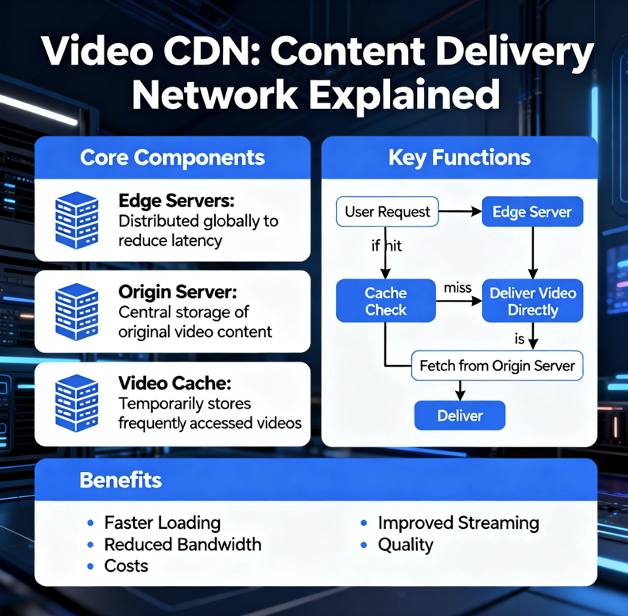
Managing Traffic Spikes and Viral Growth
Video traffic rarely grows linearly. Instead, it often appears in bursts.
A trending video, a celebrity livestream, or a product launch can suddenly increase concurrent viewers. If the infrastructure is not prepared for this surge, performance degrades quickly.
Multi-CDN architectures help absorb these spikes by spreading demand across multiple networks.
Advantages during traffic surges include:
- load distribution across several infrastructures
- reduced risk of bottlenecks
- improved resilience during sudden audience growth
- better stability during live streaming events
Because traffic is distributed, no single CDN must handle the entire demand.
Cost Optimization and Vendor Flexibility
Another benefit of multi-CDN deployment is economic flexibility.
CDN pricing varies widely depending on:
- geographic traffic distribution
- total bandwidth volume
- contract structures
- provider-specific network conditions
Using multiple types allows platforms to choose the most cost-effective delivery path for different traffic segments.
Key financial advantages include:
- optimized regional delivery costs
- the ability to adjust routing based on pricing and performance
This flexibility becomes increasingly important as traffic volumes grow and bandwidth costs scale.
Security and Traffic Control
Video platforms face a constant background of hostile traffic.
Common issues include:
- hotlinking
- scraping
- automated downloads
- unauthorized redistribution
These behaviors consume bandwidth and delivery capacity without contributing to revenue.
Multi-CDN infrastructure can help mitigate these problems when combined with edge-level security controls.
Typical protection mechanisms include:
- token-based access control
- signed URLs with expiration
- geo-based access rules
- request filtering and rate limiting
These controls help ensure that bandwidth and CDN capacity are used primarily by legitimate viewers rather than automated systems.
Operational Considerations
While multi-CDN strategies offer clear advantages, they also introduce operational complexity.
Traffic steering systems must monitor CDN performance continuously and make routing decisions based on:
- latency measurements
- error rates
- network congestion
- geographic conditions
Cache behavior must also be managed carefully. When multiple CDN configurations operate independently, inefficient routing can increase origin load and reduce cache efficiency.
Multi-CDN and Dedicated Infrastructure
For high-volume streaming platforms, CDN architecture is only one part of the delivery equation.
The original infrastructure must also support large-scale concurrency.
Important components of a robust video origin layer include:
- high-throughput storage systems
- large network bandwidth capacity
- optimized caching layers
- stable backbone connectivity
Dedicated infrastructure often becomes necessary when platforms reach significant scale. Instead of relying entirely on cloud storage and generic CDN configurations, operators deploy specialized clusters optimized for video workloads.
Platforms that combine dedicated infrastructure with advanced CDN strategies often deliver the most stable results.
When Multi-CDN Makes the Most Sense
Not every streaming platform needs a multi-CDN architecture immediately.
Smaller platforms with limited traffic can often operate successfully with a single system.
However, multi-CDN becomes increasingly valuable in situations such as:
- platforms serving global audiences
- large live streaming events
- rapid traffic growth
- premium or subscription content
- services where downtime has a significant business impact
As these conditions appear, delivery reliability and performance become strategic priorities rather than simple infrastructure choices.
Building a Reliable Video Delivery Stack
Multi-CDN architectures introduce flexibility into the delivery layer, but the objective of a video delivery architecture goes beyond simply moving files from the origin to the viewer. The real goal is to maintain stable playback across millions of devices, networks, and geographic regions where connection quality and routing conditions constantly change.
To achieve this, the most reliable platforms combine several infrastructure layers that work together to stabilize the viewing experience:
optimized origin infrastructure designed for sustained throughput
video-aware CDN configuration tuned for segment delivery and caching behavior
intelligent traffic routing that adapts to network conditions in real time
edge-level security controls that protect streams without interrupting playback
Together, these components form the operational foundation of modern streaming platforms, where delivery reliability is achieved through coordinated infrastructure rather than a single network layer.
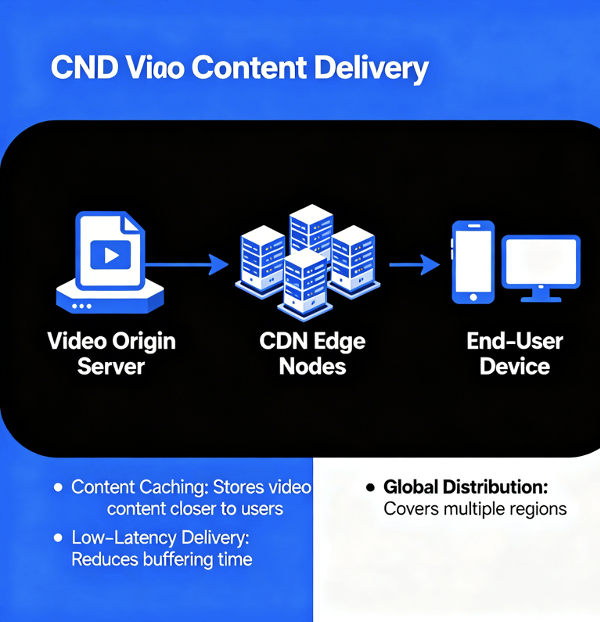
Delivering Video at Scale
Advanced Hosting provides infrastructure specifically designed for high-volume video delivery, including dedicated origin clusters and a global Video CDN optimized for streaming workloads.
Our platform supports:
- high-throughput delivery
- predictable bandwidth pricing
- infrastructure tailored for large video libraries
- scalable architecture for growing platforms
If you would like to evaluate your current delivery architecture or explore how a specialized video infrastructure could improve performance and cost predictability, contact our team to discuss your platform and traffic patterns.