
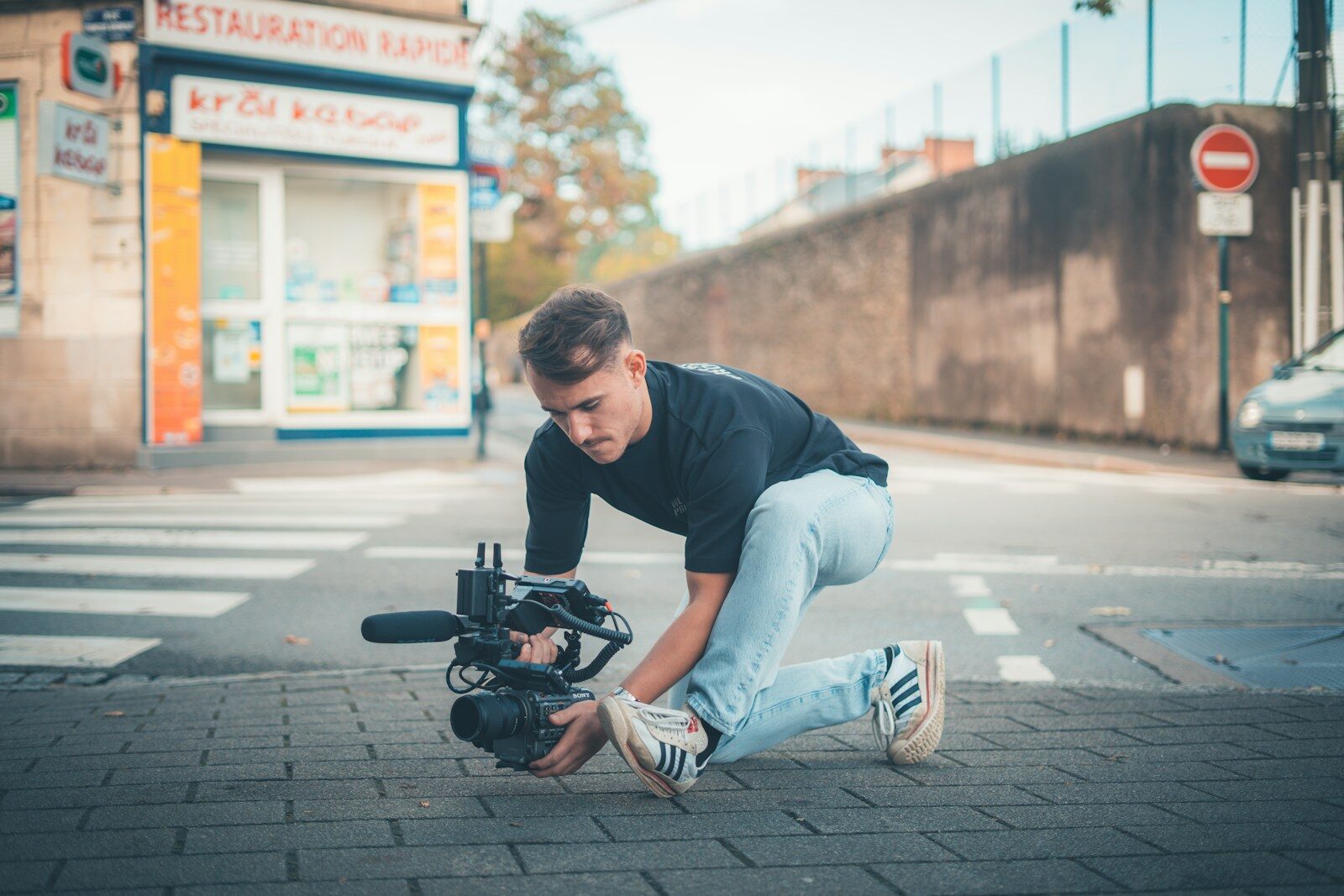
Sony FX6 – Sony’s Most Versatile Cinema Camera
In Summary: The Sony FX6 is a compact, full-frame cinema camera that bridges the gap between mirrorless agility and high-end production power. It features a 4K back-illuminated CMOS Exmor R sensor, 15+ stops of dynamic range, and an electronic variable ND filter, making it the industry standard for solo operators and documentary filmmakers.
The Sony FX6 has redefined what I expect from a mid-tier cinema line camera by packing a staggering amount of professional tech into a body that doesn’t require a gym membership to carry. Having spent hundreds of hours behind the viewfinder of various systems, I’ve found that this specific model hits the “Goldilocks zone” of filmmaking—it is powerful enough for Netflix-certified delivery yet nimble enough for a quick run-and-gun wedding shoot.
In the following sections, I’m going to break down the technical nuances that make this sensor special, look at real-world data regarding its low-light performance, and share my personal rigging configurations. We will also compare it to its siblings in the Cinema Line and tackle the most common mistakes users make when first diving into S-Cinetone and S-Log3 workflows. If you are looking to elevate your production value without the bulk of a traditional cinema rig, you’ll find everything you need to know below.
The Sensor: Why 10.2 Megapixels is the Magic Number
At first glance, a 10.2-megapixel sensor might seem low in an era of 61-megapixel photography behemoths. However, for video, this is a strategic advantage. By having fewer pixels on a full-frame surface, each individual photosite is significantly larger. This translates directly to the camera’s legendary low-light performance.
In my testing, the dual base ISO of 800 and 12,800 is a game-changer. I’ve shot in dimly lit jazz clubs where other cameras produced a muddy mess of noise; the FX6, however, retains incredible detail in the shadows at 12,800 ISO. According to technical deep-dives from ProVideo Coalition, the signal-to-noise ratio at the higher base ISO is remarkably clean, allowing filmmakers to skip heavy lighting setups in favor of natural ambiance.
Essential Features for Professional Workflows
- Electronic Variable ND Filter: This is arguably my favorite feature. Instead of swapping glass filters, you can seamlessly adjust exposure from 1/4 to 1/128 ND without changing your depth of field.
- Phase Detection Autofocus: With 627 focal plane phase-detection points, the face tracking and Eye-AF are eerily accurate, even when shooting at T1.8 on a fast prime lens.
- Modular Design: The top handle and LCD screen are removable, making it easy to strip the camera down for use on a gimbal or a drone.
- S-Cinetone Color Science: Borrowed from the flagship Sony Venice, this color profile delivers beautiful skin tones and a soft highlight roll-off straight out of the camera.
Technical Performance and Data Points
When we look at the dynamic range, Sony claims 15+ stops. In real-world stress tests involving high-contrast landscapes, the usable dynamic range typically sits around 13 stops before the noise floor becomes distracting. This puts it in direct competition with cameras twice its price.
| Feature | Sony FX6 Specification |
| Sensor Type | Full-Frame 4K CMOS Exmor R |
| Internal Recording | 4:2:2 10-bit XAVC-I / XAVC-L |
| Maximum Frame Rate | 4K up to 120fps / FHD up to 240fps |
| Base ISO | 800 and 12,800 |
| Cooling System | Internal fan for unlimited recording |
| Audio | 2x XLR inputs on the handle |
Comparing the Sony FX6 to the FX3 and FX9
Choosing between these three can be a headache. The FX3 shares the same sensor but lacks the internal ND filters and SDI ports. The FX9 offers a 6K oversampled sensor and more robust physical controls but is significantly larger and lacks the 12,800 high-base ISO (it tops out at 4,000).
For most independent creators, the Sony FX6 offers the best ROI. You get the professional I/O (Input/Output) like BNC and XLR that clients expect to see on a professional set, combined with the portability of a smaller system.
Practical Rigging Examples and Common Mistakes
I often see newcomers over-rigging this camera. Because it is so well-balanced, adding too much weight can defeat its purpose.
The Minimalist Setup:
- SmallRig or Wooden Camera top plate for extra mounting points.
- A V-mount battery plate for all-day power.
- A high-quality 35mm or 50mm prime lens.
Common Mistakes to Avoid:
- Overexposing S-Log3: Unlike some older Sony cameras, you don’t need to overexpose by 2 stops. I find that exposing “to the right” by about 1 to 1.5 stops yields the best results for post-production grading.
- Neglecting the Fan Settings: In very quiet environments, ensure the fan is set to “Auto” or “Off during recording” to avoid picking up mechanical hum on your scratch mic.
- Using Slow Media: To record 4K 120fps, you need CFexpress Type A cards or V90 rated SD cards. Attempting to use slower cards will lead to corrupted files or the camera refusing to record.
Steps to Setting Up Your Sony FX6 for Success
Setting up a cinema camera for the first time can be daunting. Here is the checklist I use for every new unit:
- Update Firmware: Sony frequently releases updates that improve autofocus stability and add new features like anamorphic de-squeeze.
- Assign Custom Buttons: Map your most-used features (like Focus Magnification or Zebra toggles) to the physical buttons on the side of the body.
- Set the Base ISO: Make sure you understand the difference between Cine EI mode and Custom mode. For the most flexibility in post, stick to Cine EI.
- Calibrate the Monitor: The included LCD is decent, but ensure your brightness and contrast settings are calibrated so you aren’t misjudging your exposure in bright daylight.
The Impact of the Sony FX6 on Industry Standards
The adoption of the Sony FX6 by major platforms like Netflix has changed the game for budget-conscious filmmakers. According to the Netflix Approved Camera List, the FX6 is a primary choice for documentary and “B-cam” work. This means that as an owner-operator, you can confidently tell clients that your gear meets the highest streaming standards.
The internal cooling system is another data point worth noting. Unlike mirrorless cameras that often overheat after 30 minutes of 4K 60fps recording, the FX6 uses a sophisticated active heat dissipation system. I have run this camera for six hours straight in a warm studio environment without a single thermal warning.
Pros and Cons
Pros:
- Unbeatable low-light performance at ISO 12,800.
- Built-in ND filters save immense amounts of time on set.
- Professional ports (SDI, Timecode, XLR) for high-end productions.
- Fast and reliable autofocus that works even in high frame rates.
Cons:
- The LCD monitor mount can feel a bit flimsy if not tightened properly.
- CFexpress Type A cards are still quite expensive compared to Type B.
- The side handle grip sensor can be finicky with certain gloves.
Frequently Asked Questions
Does the Sony FX6 shoot 8K?
No, the FX6 is a native 4K camera. It prioritizes pixel quality and low-light sensitivity over raw resolution. If you require 8K, you would need to look at the Sony A1 or the Burano.
Can I use E-mount photo lenses on the FX6?
Absolutely. One of the biggest strengths of the system is the compatibility with the entire Sony E-mount ecosystem, including third-party options from Sigma and Tamron. The autofocus works seamlessly with most modern E-mount glass.
What is the difference between Cine EI and Custom mode?
Cine EI (Exposure Index) is designed for a traditional cinema workflow where you bake in the least amount of processing possible to allow for maximum grading in post. Custom mode allows you to apply “looks” or baked-in settings if you need to deliver a finished file immediately.
Is the Sony FX6 weather-sealed?
It features a high level of dust and moisture resistance, but it is not waterproof. I always recommend using a rain cover for heavy downpours, though it handles light mist and humid environments exceptionally well.
How long does the battery last?
Using a standard BP-U35 battery, you can expect about 90 to 100 minutes of continuous recording. Upgrading to a larger BP-U60 or V-mount battery can easily extend this to 3–4 hours.
Moving Forward with the FX6
In my professional opinion, the Sony FX6 remains the most logical investment for a filmmaker looking to move into the professional sphere. It teaches you the habits of a cinema workflow—managing NDs, using SDI monitors, and working with Log footage—while still providing the safety net of world-class autofocus.
Whether you are shooting a high-end commercial or a gritty verité documentary, this camera adapts to your needs rather than forcing you to adapt to its limitations. The balance of size, speed, and image quality is, quite frankly, hard to beat in the current market. Keep practicing with the Cine EI workflow, invest in fast glass, and let the sensor do the heavy lifting in those difficult lighting situations.
