How Long Do Drone Batteries Last? What the Cycle Count Tells You
Almost every part of a drone is built to last for years. Motors run for thousands of hours, frames shrug off hard landings, and the camera usually outlives the airframe it rides on. The battery is the exception. It is a consumable, it starts aging the day it leaves the factory, and it is nearly always the first component that makes you spend money on the aircraft again. So the question of how long a pack lasts is really a question about chemistry, charging habits, and a number many pilots never look at: the cycle count.
Serious operators look at it constantly. Commercial crews give every pack a serial number and a log, and those numbers tend to live in drone fleet management software such as FlybyOps alongside airframe hours and maintenance records, while a hobbyist with two packs can track the same thing with a paint pen and a notes app. The habit matters more than the tooling: know how many cycles each battery has absorbed, because that number, read correctly, tells you when a pack is drifting from asset to liability.
What a charge cycle is, and how your pack counts them
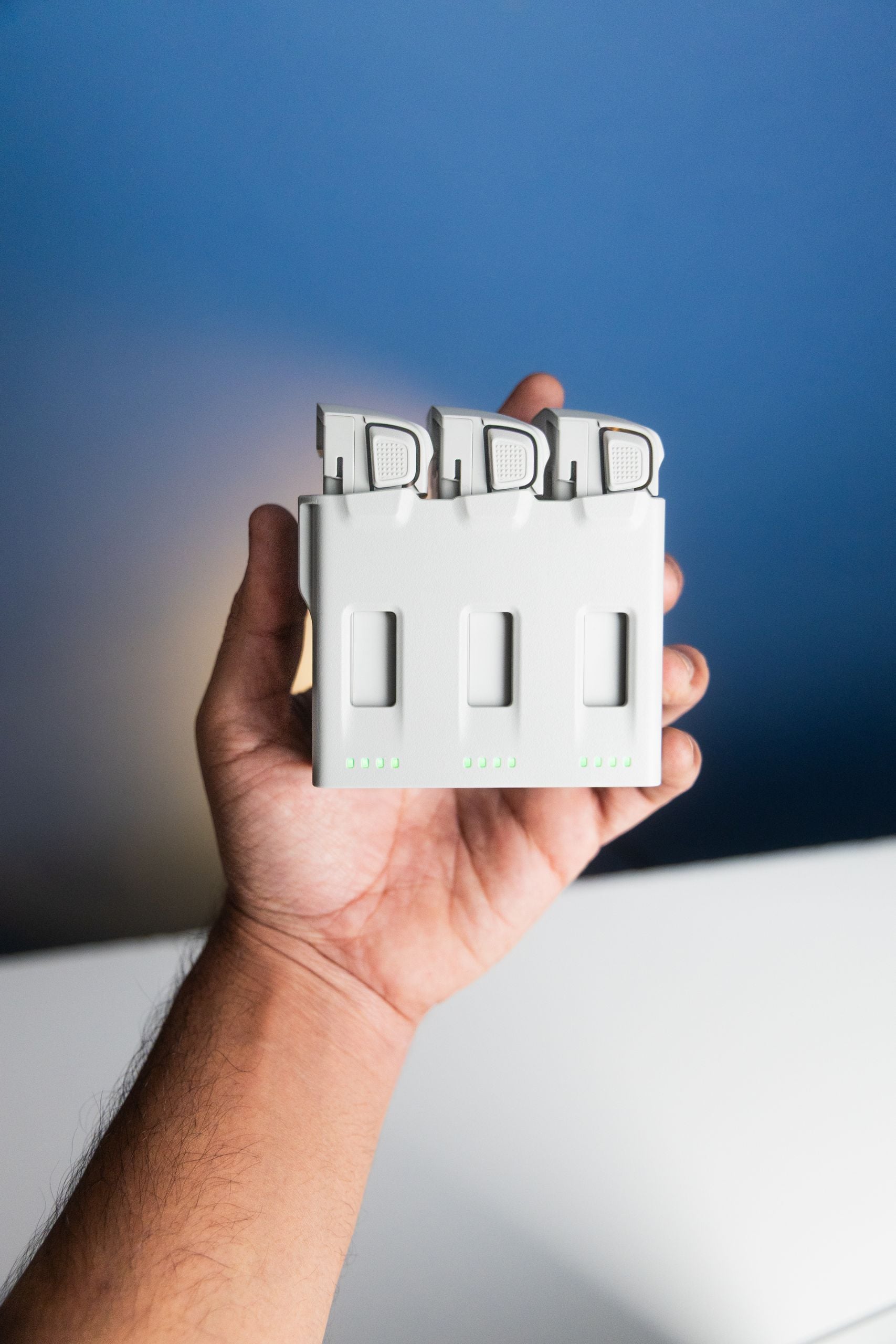
A cycle is one full battery’s worth of energy delivered, however you get there. Drain a pack from 100 percent down to 20, recharge it, then fly it down to 60, and you have logged roughly one cycle across two flights, not two cycles. Smart batteries, the kind with a status button and their own circuit board, accumulate this internally and report it through the manufacturer’s app. Bare LiPo packs, the pouch cells with a balance lead that FPV pilots favor, count nothing at all, which is why those pilots number their packs and keep tallies by hand.
The circuit board doing the counting is a battery management system, and it watches far more than cycles. It logs per-cell voltages, temperatures, and charge behavior, and it will quietly refuse to charge a pack that is too cold or too hot. When people say drone batteries have gotten smarter, this is what they mean: the pack now knows its own history better than the pilot does.
The wear signs that matter more than the number
Cycle count is a proxy. What you care about is what those cycles have done to the cells, and three symptoms tell that story. The first is capacity fade. A pack that delivered 25 minutes of flight when new and now manages 18 has lost real capacity, and most manufacturer apps surface this as a health or capacity percentage. The second is voltage sag. Internal resistance rises as cells age, so an old pack’s voltage dips harder under throttle. In practice that means low-battery warnings arrive earlier, aggressive climbs trigger them instantly, and cold weather, which raises internal resistance further, turns a tired pack into an unusable one.
The third symptom is cell imbalance: the individual cells inside the pack drifting apart in voltage faster than the electronics can level them out. Small, occasional drift is normal. A pack that keeps landing with one cell sagging below its siblings is telling you that cell is dying ahead of the others.
Then there is swelling, which is less a symptom than a verdict. A puffed pack means the electrolyte inside has broken down and produced gas. Retire it. Do not charge it again, do not fly it one last time, and do not put it in household trash. Discharge it and hand it to a battery recycling point.
Storage habits decide more than flying does
Most drone batteries die on a shelf, fully charged, in a hot garage, rather than in the air. Lithium cells age fastest when held at full charge, and heat multiplies the damage. That is why smart packs self-discharge down to a storage level of around half charge after several idle days, and why the label on a bare LiPo tells you to store it at about 3.8 volts per cell. If your batteries spend weeks sitting at 100 percent, you are paying for that convenience in future capacity.
The rest of good storage is mundane. Keep packs somewhere cool and dry instead of a car trunk or a windowsill. Charge them on the manufacturer’s charger, in a spot where you can see them, and never charge a pack that is below freezing, because charging cold cells plates lithium metal onto the anode and permanently damages them. Top packs up to full shortly before you fly, not days in advance.
The retirement rules working fleets use
Hobby pilots retire packs when flights get annoyingly short. Fleets cannot run on that kind of guesswork, so they write the criteria down. A typical policy pulls a pack at whichever comes first: a cycle ceiling, often somewhere in the 150 to 300 range depending on manufacturer guidance; a capacity floor, commonly 80 percent of original; any swelling, casing damage, or heat discoloration at the connector; or sag bad enough to trip early warnings on a fresh charge. Consumer packs will often run 200 to 500 cycles before fade becomes obvious, but commercial operators retire earlier because a forced landing over a job site costs far more than a battery.
Two habits make those rules work. Rotation spreads flights across the whole battery pool so packs age together instead of one pack absorbing all the wear. And on aircraft that fly paired batteries, matching packs of similar age and cycle count keeps one tired battery from dragging down a fresh one in flight.
Taking drone batteries on an airline flight
Drone packs are lithium batteries, and the FAA treats spares strictly on passenger flights. They go in carry-on baggage only, never checked, with the terminals taped or cased so they cannot short against anything metal. Packs up to 100 watt hours, which covers most consumer drones, need no approval. Between 101 and 160 watt hours you need the airline’s sign-off and are limited to two spares, and the large packs on heavy enterprise aircraft exceed those limits entirely, which is why crews ship them by ground. The FAA’s PackSafe page on lithium batteries carries the current limits, and it is a better read the night before a travel job than at the security line.
FAQ
How many cycles does a drone battery last?
Plan on 200 to 500 cycles for a consumer pack before capacity fade becomes hard to ignore. Commercial operators usually retire packs earlier, around 150 to 300 cycles or once capacity drops near 80 percent of original, because reliability matters more than squeezing out the final flights.
Should I store drone batteries fully charged?
No. Sitting at full charge is the fastest way to age lithium cells, especially in heat. Store packs at roughly half charge, let smart batteries self-discharge to their storage level, and charge to full shortly before flying rather than days ahead.
Is a swollen drone battery safe to use?
No. Swelling means gas has formed inside the cells and the pack is past saving. Stop charging it, stop flying it, and take it to a battery recycling drop-off instead of the trash. Replacing one pack is far cheaper than dealing with a fire.
Why is my drone’s flight time getting shorter?
Aging cells lose capacity and gain internal resistance, so the pack stores less energy and sags harder under load. You see it as shorter flights and earlier low-battery warnings, and cold weather makes both worse. A noticeable drop in flight time means the pack is close to retirement.
Can I take drone batteries on an airplane?
Spare packs must travel in your carry-on with the terminals protected, never in checked baggage. Batteries up to 100 Wh need no approval, packs between 101 and 160 Wh require airline approval with a limit of two spares, and anything larger has to move by ground.