How eSIMs and Virtual Phone Numbers Work Together in Modern Smartphones
A smartphone can now handle multiple cellular connections and phone numbers without relying on several physical SIM cards. The change is partly visible in the hardware, with manufacturers moving toward embedded SIM technology, but much of it happens in the software that manages mobile profiles and internet-based communication.
eSIMs and virtual phone numbers are part of that change. They are often discussed together, although they solve different technical problems. An eSIM stores a mobile subscription inside compatible hardware. A virtual phone number is managed through software and can route calls or messages through an internet connection.
For people who travel, work remotely, manage business lines, or develop mobile applications, knowing how these technologies interact makes it easier to understand what a modern smartphone can actually do.
From Physical SIM Cards to Embedded SIM Technology
A traditional SIM card stores subscriber information used by a mobile network to identify and authenticate an account. An eSIM performs the same basic role without a removable card. The SIM hardware is built into the smartphone, while the carrier profile is downloaded and stored electronically.
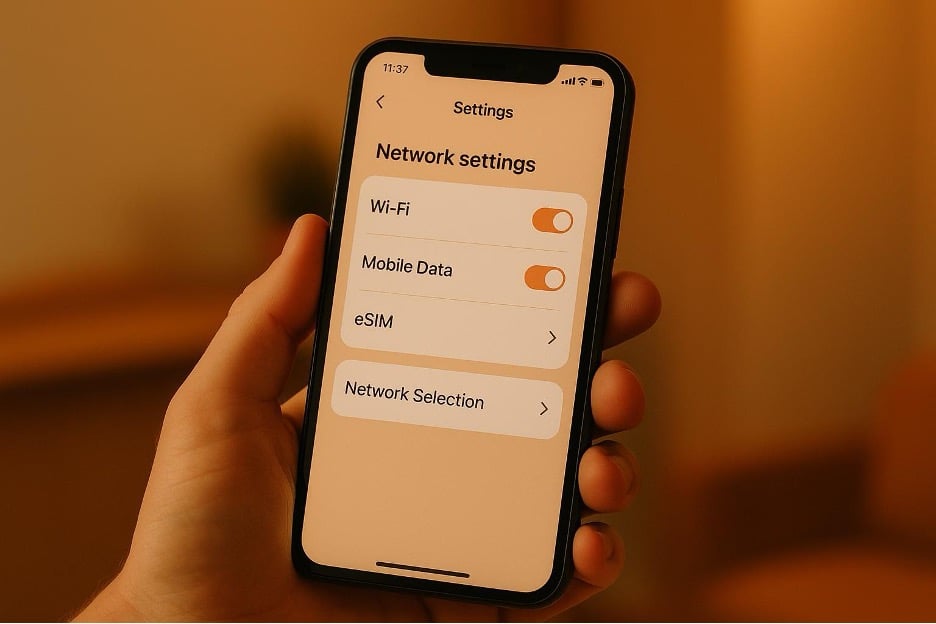
Instead of inserting a card into a SIM tray, a compatible phone can receive a carrier profile through a QR code, an app, or another activation method. The process varies between devices and providers.
Many current smartphones can store several eSIM profiles, although the number that can remain active varies by model. Some devices combine a physical SIM with an eSIM, while newer models can support multiple active eSIM connections.
Removing the physical SIM tray also gives manufacturers more flexibility when arranging components inside a phone and eliminates a mechanical opening that needs protection against dust and water.
For users, the main advantage is flexibility. Switching mobile subscriptions no longer necessarily involves changing a piece of hardware. Dual-SIM phones can keep a primary line while adding another cellular plan for work, travel, or mobile data.
Where Virtual Phone Numbers Fit
An eSIM and a virtual phone number operate at different layers of a mobile communications system.
The eSIM handles the relationship between the smartphone and a cellular network. A virtual number does not need to be associated with a physical SIM in the same way. It can be managed by an online service and used through an application, VoIP system, or another internet-based communications platform.
That becomes useful when one phone needs several communication identities.
Someone could use a regular mobile number for personal calls, an eSIM for mobile data while travelling, and a virtual number for business communication. The services can coexist on the same device while performing different jobs.
Services such as eSIM Plus operate in this area of digital mobile connectivity, combining eSIM-related services with phone-number functionality. The technical distinction remains the same: the eSIM provides cellular network access, while the virtual number is handled by a communications service.
A virtual number does not require an eSIM. If it works through an application, it can use an internet connection supplied by Wi-Fi, a physical SIM, or an eSIM.
How an eSIM and Virtual Number Work Together
Consider someone working abroad for several weeks. Their regular mobile subscription may still be needed for their existing number, but using that connection for mobile data while roaming could be expensive.
A travel eSIM can provide another cellular data connection. Once activated, the phone can use it for browsing, messaging, cloud applications, video calls, and other online services.
A virtual phone number can operate through the same internet connection.
The basic path is:
Cellular network → eSIM profile → smartphone data connection → internet → virtual phone service → calls or messages
The virtual number does not replace the eSIM. It uses the connectivity available to the phone.
This also explains data-only eSIMs. Many travel eSIM plans provide mobile data without a conventional telephone number. For someone who relies on internet-based messaging or a separate virtual number, that may be enough.
The underlying networks are still different. A carrier-issued mobile number belongs to the operator’s cellular and telephone-numbering infrastructure. A virtual number may use VoIP or another cloud communications platform.
Multiple Numbers Without Multiple Phones
Dual-SIM hardware already lets a smartphone operate two cellular subscriptions. Virtual numbers take the idea further by moving another communication line into software.
A phone might contain a physical SIM for the primary subscription and an eSIM for a second cellular plan. A virtual number can then provide another communication channel through an application.
There are several practical uses.
Work and personal communication: A second number can separate business calls and messages from a private mobile line without requiring another handset.
International travel: An eSIM can provide local or regional data while the virtual number handles selected communications. The primary subscription can remain available without expensive roaming data.
Temporary projects: A contractor or development team may need a number for a particular project. A virtual line can be easier to manage than buying another phone and SIM.
Software testing: Virtual numbers also have a technical role in development environments. They can provide separate endpoints for testing registration, SMS authentication, password recovery, and other communication-dependent features. HardwareSecrets has covered virtual number infrastructure in connection with automated QA, regional testing, and cloud-based software development.
eSIM, Mobile Numbers, and VoIP Are Different Technologies
These terms are easy to mix up, but they describe different parts of the system.
An eSIM is a SIM technology that stores a downloadable cellular subscription profile inside compatible hardware.
A mobile number identifies a telephone service associated with a carrier.
A virtual phone number is provided through a software-based communications service and may support calls, SMS, or both.
VoIP describes voice communication carried over an IP network. A virtual number may use VoIP, but the two terms are not interchangeable.
The distinction matters for authentication. Some websites and financial services identify virtual or VoIP numbers and refuse to send verification codes to them. Others accept them.
The same issue exists with eSIMs. Installing an eSIM does not automatically give a phone a new voice number. Many travel eSIMs are data-only and provide no conventional SMS or voice service.
Where the Technology Still Has Limits
Moving connectivity into software does not remove hardware and network requirements.
Device compatibility comes first. A phone needs the necessary eSIM hardware and software support. Regional versions of the same model can also have different SIM configurations.
Carrier restrictions matter too. A phone may support eSIM technology but remain locked to a provider or be unable to connect to a particular network.
Virtual numbers have their own limitations. Some support calls and SMS, while others offer only selected functions. Availability varies between countries, and online services can treat virtual numbers differently from conventional mobile numbers.
Emergency calling requires attention. Depending on the provider and country, a virtual number may not offer the same emergency-calling capabilities as a standard cellular subscription.
Number ownership can also become a problem. Temporary numbers may eventually be released or reassigned. Anyone using one for account recovery should understand the provider’s retention policy before making it the only recovery method.
What This Means for Modern Smartphones
The important change is not simply that smartphones are losing physical SIM cards. Mobile connectivity and telephone services are becoming less dependent on a single piece of hardware.
The cellular layer can be managed through an eSIM profile, while additional communication services can run through applications and cloud infrastructure. A single smartphone can therefore handle different connections and communication identities without requiring several physical SIM cards or separate handsets.
eSIMs and virtual phone numbers are not competing technologies. They occupy different parts of the communications stack. The eSIM manages the connection between the device and a cellular network, while a virtual number provides another way to communicate through software.
Once those roles are separated, the architecture behind multi-line smartphones is much easier to understand.