Tips for Reducing Lag in Browser-Based Games
Nothing ruins a good gaming session faster than lag. You’re seconds away from a clutch move, then your screen stutters and your character crawls like it’s stuck in wet cement. Sound familiar? The good news is that most browser lag comes from a handful of usual suspects, and you can fix them without buying a single piece of new hardware.
Let’s walk through what actually helps.
First, Figure Out What Kind of Lag You’ve Got
Here’s the thing. “Lag” is a lazy word. It lumps three separate problems into one, and each needs a different fix.
There’s frame lag, where the game looks choppy and animations feel rough. That usually points to your GPU or CPU struggling to draw the scene. Then there’s input lag, when your clicks land a beat late. And finally network lag, where you rubberband around or freeze mid-action. That one’s your connection, not your computer.
Why does this matter? Because tweaking your shadow settings won’t do a thing if your real problem is a 300ms ping. Most browsers have built-in tools to check. Chrome’s DevTools Performance panel shows your FPS and input delay in real time, and a quick speed test tells you if your connection is the villain. Diagnose first, then act.
Clean Up Your Browser Before You Play
You know what quietly eats your frame rate? Everything else you’ve got open. Each tab munches RAM and CPU cycles. Extensions run scripts in the background while you play, ad blockers and password managers being the loudest offenders. Add auto-playing videos and sneaky background updates, and your browser barely has enough juice left for the game.
So give it a clean desk. Close the tabs you don’t need, pause a few extensions, and shut down heavy apps hiding in the background. On Windows, Task Manager sorted by memory usage often reveals the real culprit, and it’s rarely the game itself.
Picture this. You’re mid-spin on a live table over at BigPirate Sweepstakes Casino, that adventure-driven social gaming site that showed up recently, and suddenly the stream chugs and your action hangs for a second. Your first instinct blames the site. Nine times out of ten, though, it’s your browser gasping for air under a stack of open tabs. Sites that blend live dealer streams with animated gameplay like that ask a lot of your machine, so they feel the clutter more than a simple slot ever would. Clear it out and the whole thing runs clean. Better yet, spin up a separate gaming profile with zero extensions. It’s one of the easiest fixes going, and it clears a pile of hidden problems in one move.
Turn On Hardware Acceleration
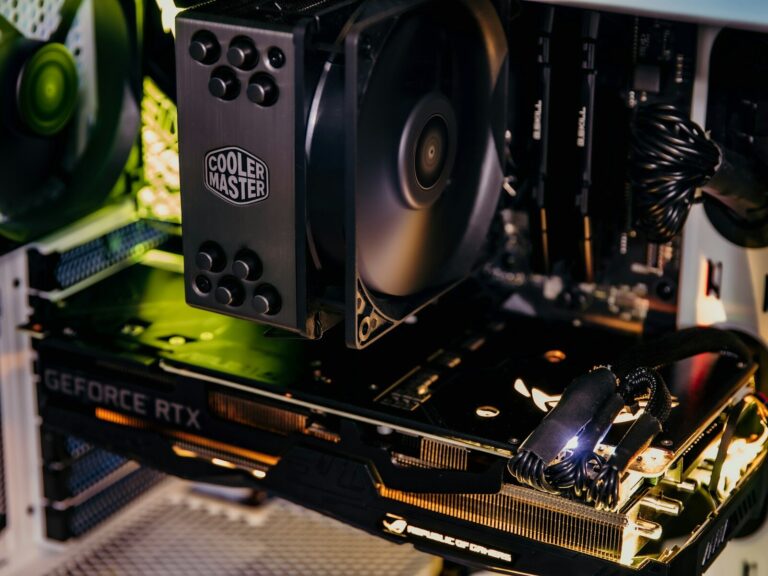
This one’s a quiet hero. Modern browser games rely on your GPU to draw WebGL and Canvas graphics. When hardware acceleration is off, all that work dumps onto your CPU, and your frames suffer for it.
Head to your browser settings, find the hardware acceleration toggle, switch it on, then restart. Testing on low-end machines shows this can shave 30 to 50 milliseconds off input delay. That’s the gap between a snappy click and a sluggish one. Odd tip, though. If your frames still hitch after turning it on, try switching it off instead. Ancient graphics drivers sometimes act up, and a fresh driver update usually settles things down.
Trim the Graphics and Go Full Screen
Got in-game settings? Use them. Lowering resolution, killing particle effects, and turning off shadows frees up serious GPU room. And honestly, smooth 45 FPS with modest settings feels far nicer than a jittery 60 with everything cranked to the max.
Full-screen mode helps too. Press F11 and the browser stops wrestling with page scaling and compositing overhead. Low-end laptops gain the most here. One more thing: heat throttles performance, so keep your laptop on a hard, flat surface so it can breathe. A cushion smothers the vents, and a hot chip slows itself down to survive.
Fix the Connection Last
If your ping is the problem, no graphics trick will save you. Wired beats wireless every time. An Ethernet cable gives you lower, steadier latency, and it shrugs off the interference that walls and microwaves throw at your Wi-Fi signal. Stuck on wireless? Move closer to the router and boot the other devices hogging your bandwidth.
So there you have it. Diagnose the lag, tidy your browser, lean on your GPU, trim the extras, and lock down your connection. Do those five things and your browser games will feel a whole lot smoother. Now go win that match.