What Should You Look for in CNC Router Machining for Custom Hardware Projects?
Anyone who has tried to build custom hardware, a control panel, an enclosure, a mounting plate, a one off chassis, knows the gap between a clean CAD file and a finished part is wider than it looks. You can model something perfect on screen and still end up with edges that do not line up, holes that sit a fraction off, or a material that warps the moment it is cut. So how do you close that gap? For flat and sheet based parts, the answer often comes down to CNC routing, and knowing what to look for before you send a file.
What does a CNC router actually do well?
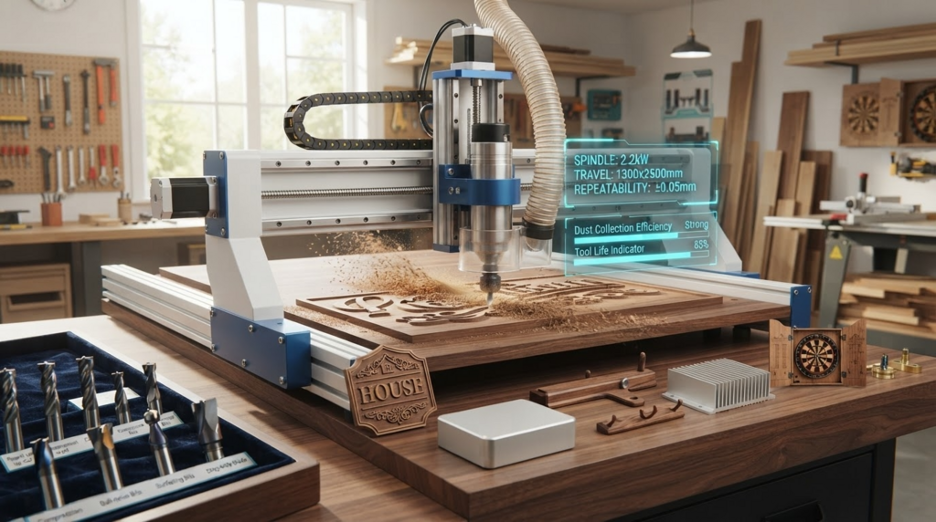
A CNC router moves a spinning cutting tool across a sheet of material along a programmed path. It shines on flat and gently contoured work: panels, plates, brackets, signage, jigs, and large enclosure faces. Where a mill is built for heavy metal and deep cuts, a router covers wide, flat stock quickly and cleanly, which is exactly the shape most custom hardware projects need.
The strength that matters for hardware builders is repeatability. Cut one panel or cut fifty, and each one comes out the same. The machine does not get tired or eyeball a measurement. For anyone who has hand drilled a row of holes and watched them drift, that consistency alone is worth the switch.
Which materials can you actually use?
This is the first question to ask any shop. A router that only handles wood and soft plastic is fine for a hobby sign and useless for a real enclosure.
The materials that matter for hardware work include aluminium, acrylic, ABS, polycarbonate, POM, and composites such as carbon fibre and fibreglass. A capable shop machines all of these and more, often 500 or more materials in total. That range lets you match the material to the job, a lightweight aluminium faceplate here, a clear acrylic window there, without hunting for a second supplier.
If you want to see how a full service shop lists this out, XTJ publishes its material range and tolerances alongside its CNC router machining services, which makes it easy to check whether your material is covered before you commit to a design.
How tight can the tolerances really get?
Tolerance is where amateur and professional results split. A hardware project lives or dies on whether the standoffs line up, the connector cutout fits, and the lid closes flush. Loose tolerances turn a clean design into a box of parts that almost fit.
A quality router service can hold tolerances near plus or minus 0.003mm on suitable materials. That is tight enough for press fit inserts, precise mounting patterns, and panel cutouts that accept a connector without filing. When you request a quote, ask for the tolerance the shop will guarantee on your specific material, because soft plastics and hard metals behave differently under the tool.
Does surface finish matter for routed parts?
It matters more than most builders expect. A raw routed edge can be sharp, slightly rough, or marked by the tool path. For a hidden internal bracket that is fine. For a faceplate someone will see and touch every day, it is not.
Look for a shop that offers finishing in house: anodizing for aluminium, powder coating for durable colour, polishing for a clean look, and sandblasting for an even matte texture. Getting the finish done under the same roof avoids shipping a raw part to a second vendor and waiting again. It also keeps one company accountable for how the final piece looks and feels.
How should you prepare your file to get a good result?
A router is only as good as the file you feed it. A few habits save time and money.
Send an editable CAD file in a standard format rather than a flat image, so the shop can read your real geometry. Mark the dimensions that truly matter, the ones that must be exact, so the machinist knows where to focus. Note the material and thickness clearly. Call out any hole that needs to be threaded or press fit, since those need different handling than a simple through hole.
Good shops will flag problems before cutting: a feature too small for the tool, a wall too thin to survive, a tolerance too tight for the chosen plastic. That feedback loop is a sign of a partner worth keeping. A shop that cuts blindly and ships whatever comes out is a shop that will waste your material.
What about small runs versus one offs?
Custom hardware rarely needs thousands of a part. You might want one prototype, then five for a small batch, then a few dozen if the project grows. This is where minimum order requirements can sting. A vendor that forces a large minimum makes small hardware work uneconomical.
Look for a shop with no minimum order quantity, so a single prototype panel is as welcome as a batch. The same setup should scale if your project takes off, without forcing you to redraw the part or find a new supplier. That flexibility is what lets a weekend build turn into a small product without a painful transition.
The short version
For custom hardware, CNC routing solves the flat part problem that trips up almost every builder. When you choose a service, check four things in order: the material range, the guaranteed tolerance, the in house finishing options, and the willingness to take small runs. Prepare a clean CAD file, mark what matters, and pick a shop that talks to you before it cuts. Get those right and the gap between the perfect model on your screen and the part in your hand all but disappears.