What a Data Center Retrofit Actually Involves
The physical structures of data centers are aging fast. Most data centers are running in buildings that were constructed 10 years ago or more. Those buildings were designed for entirely different computing technologies, far lower computing densities, and very different efficiency requirements.
Eventually, every facility reaches a critical crossroads.
Rebuilding a data center as part of a retrofit can be a cost-effective alternative to a new build. It is possible to increase the capacity of a live facility, to improve energy efficiency, and to introduce the latest data center hardware. However, the actual implementation of a data center retrofit is far more complex than simply replacing old parts with new ones. Here are a few of the key points that can surprise people.
Assessing the Existing Baseline
To begin designing a retrofit project, the engineers and the operations team must first undertake a thorough study and analysis of the facility. Where do you even start? To design a retrofit, a full audit of the existing environment must first take place to establish the current physical structure and determine the structural loadings to design for. Subsequently, a detailed study of the existing power distribution and cooling infrastructure must also be undertaken to establish the current capability of both systems and to identify any potential constraints or issues prior to the start of any design work.
Understanding your current performance is critical to developing any design for a retrofit project. Thermal maps need to be created, airflow restrictions identified, and power distribution mapped down to circuit level to highlight any power constraints. Small things like a missing gridded section in the air return can cause huge problems in a matter of minutes. I recall a situation where a server room was undergoing a move, and the airflow through the room had not been considered. A small restriction in the air return caused an entire rack to overheat in minutes.
Designing for Live Environments
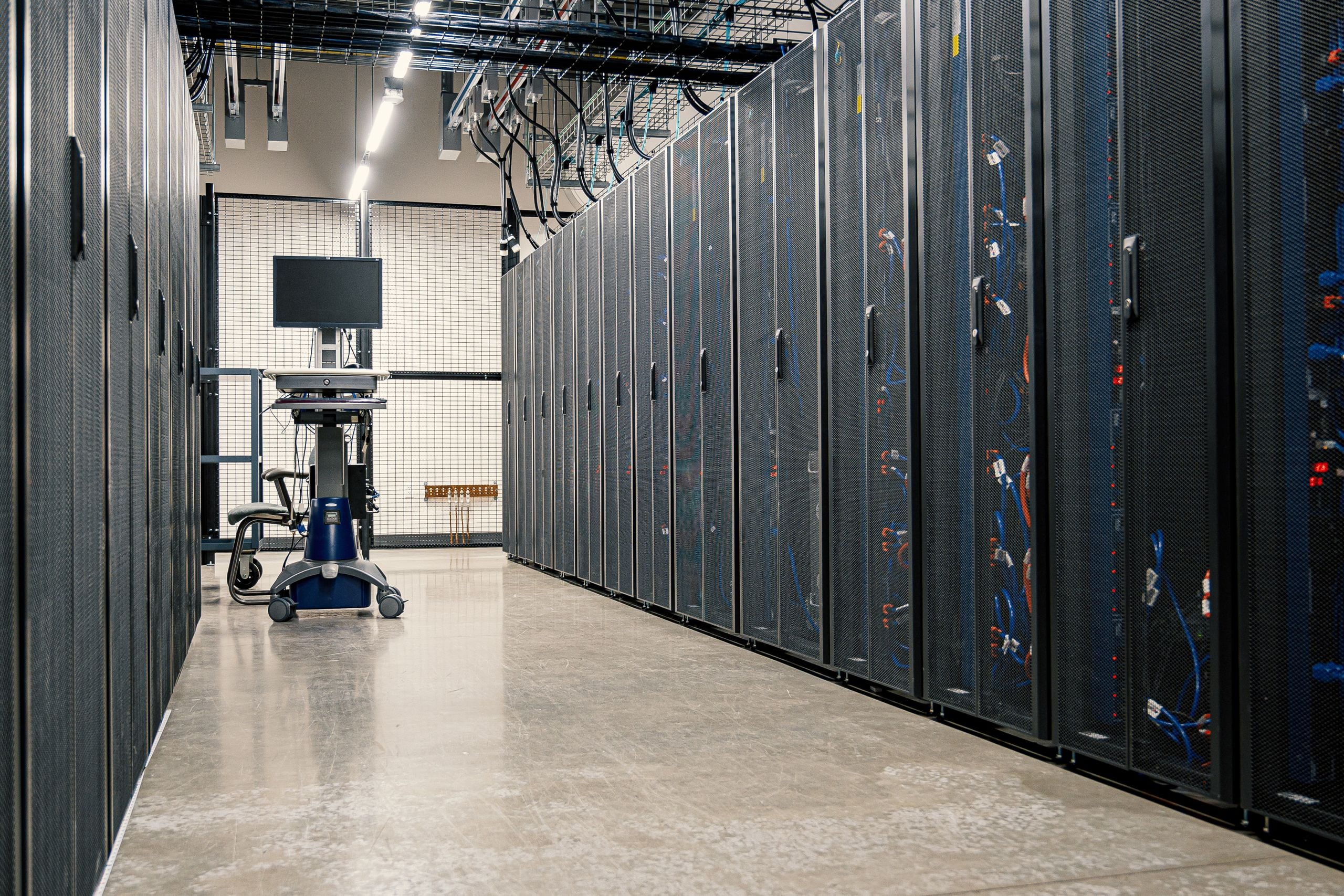
The single biggest challenge for a data center retrofit is that, for most of the retrofit, a data center will be “live”. Thus it cannot be “closed down” for a period of time to allow for construction to take place. Unlike a new building where a project team can move items into a room and then knock the walls down a few days later, a live data center contains live IT equipment.
How do you rebuild an engine while the car is still moving on the highway?
Furthermore, the physical space of a live facility is also very restricted. In the above-mentioned server room, for example, I had to work around the existing 19-inch racks. This required me to work in small spaces with many restrictions. I have to make sure that I am able to bring in the right number of people to work on a live facility like this, with the right amount of expertise to get the job done. Furthermore, I have to coordinate their work in such a way that we can execute the upgrades on time and within the given restrictions.
Upgrading Power and Cooling Infrastructure
Modern IT equipment draws much more power per rack than older IT equipment did. Therefore, as rack density increases from 5 kW/rack to 30 kW/rack and more, older data center cooling and power distribution systems are no longer sufficient to support modern IT operations.
Upgrading the power and cooling in a live facility during a retrofit is hard work and takes a lot of planning, but pays off quickly when you turn on the new system for the first time. Here are a few examples of the work that is involved when upgrading the power and cooling to run more power-dense servers. First up are the uninterruptible power supplies (UPS), which can be very inefficient and also very big and are often found in dedicated rooms. These days, there are many more efficient and much smaller UPSs available; in fact, they are available in a modular form, which makes them ideal for retrofits. The main power distribution (switchgear & transformers) will also need to be upgraded to cope with the increased power requirements of the new servers. As for the cooling (CRACs) in the server room, traditional computer room air conditioning units are often replaced with in-row cooling systems, rear-door heat exchangers, or even direct-to-chip liquid cooling systems. To prevent hot air from the servers from mixing with cold air from the air conditioning units, hot and cold aisle containment systems are also added to the server room. When these new cooling skids are turned on for the first time, it’s a great feeling.
Navigating Physical and Logistical Constraints
Physical space in an active facility is always tightly constrained. Rigging heavy equipment like generators, chillers, or multi-ton power modules into tight indoor mechanical rooms presents massive logistical hurdles for the crew.
When planning the space for the retrofitted cabinets, the floor load capacity (FLC) needs to be checked. Often, the new cabinets and switchgear are much heavier than the old equipment and so require additional floor support. Also, clear paths need to be made for waste removal and for the movement of personnel. Once the new equipment has been installed, the space needs to be dust- and noise-free to prevent contamination of the live IT equipment. It’s a messy job, but someone has got to do it!
Assembling the Specialized Labor Force
Executing complex physical and mechanical upgrades in a live environment demands specialized expertise. This is far beyond general commercial trade knowledge and involves working in close proximity to high-voltage equipment and sensitive fiber connections, amongst other hazards.
To assemble the labor required for these sorts of physical and mechanical upgrades in a live data center environment, the operators require a team of experienced craftspeople who can work to strict protocols to ensure the required cleanroom procedures are followed, the correct hot-work permits are in place, and that the required management of the redundant systems in place is robust. This team of experienced data center contractors can be sourced through a data center staffing solutions provider.
Commissioning and Integration
Can the new setup handle unexpected load spikes without tripping?
Commissioning a new data center means conducting stress tests on power and cooling systems under full load. Integrated system testing (ISTS) is used to test emergency power off (EPO) functionality and ensure that backup generators, power distribution systems, and cooling systems will function in the event of an outage. Finally, the building management system (BMS) and data center infrastructure management (DCIM) platforms must be configured to obtain monitoring data and telemetry from the newly installed data center hardware and begin operation smoothly. The stress of the final test run to verify successful deployment of new data center hardware is over when systems are up and running smoothly.
Building a Sustainable Future
A good retrofit can extend the life of a facility’s aging infrastructure and be cost-effective to run, all while enabling the data center to support the latest generation of applications and services such as AI and HPC.
And that is ultimately what makes the effort worthwhile.
By executing a facility modernization in a structured and phased manner, facility managers can ensure that the necessary upgrades are completed in a safe manner. Once completed, the modernized data center facility will be able to support the organization’s operations for many years to come.