Best Apple Watch Bands Compared: 10 Picks for Comfort, Materials, and Durability
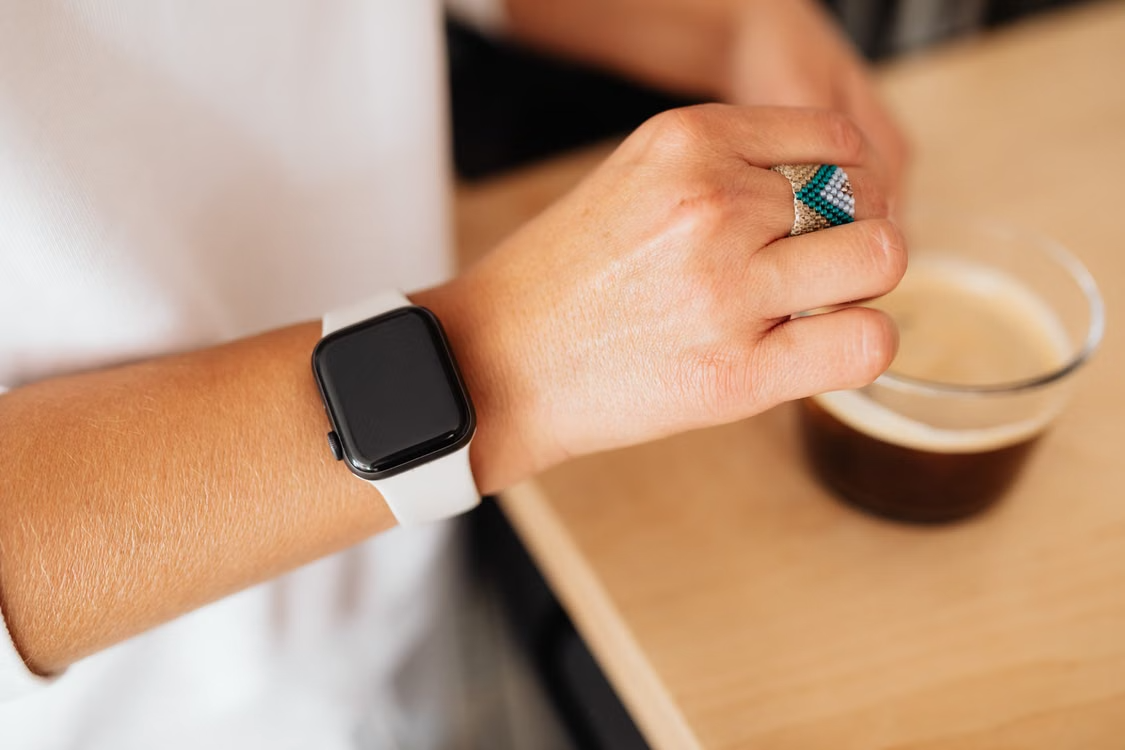
Photo by https://kaboompics.com/ on Pexels
Most band roundups rank straps by how they photograph. That is the wrong test.
A watch band is a load-bearing mechanical part. It sits against skin for sixteen hours a day, soaks up sweat, and holds a sensor array flat against your wrist so the optical heart rate reader has something usable to work with. Get it wrong and the consequences are not cosmetic.
So this comparison is built around a different question. Not which band looks best on day one, but which one behaves predictably on day four hundred.
Why The Strap Deserves More Scrutiny Than The Screen
Buyers will happily spend an evening comparing panel technologies and sensor specs. Fair enough, and we have gone deep on smartwatch display tradeoffs ourselves. But the display is the part you look at for maybe fifteen minutes across a whole day. The band is the part you are physically attached to for the other twenty-three hours.
Researchers at Florida Atlantic University swabbed wristbands across five material types and found that 95 percent of them carried bacterial contamination, with rubber and plastic straps showing far higher counts than metal ones. Porous surfaces trap moisture. Moisture holds onto everything else.
Apple’s own guidance on wearing the watch properly points out that a band which sits too loose or too tight interferes with sensor readings, and that a small number of people react to materials such as nickel found in some straps. Considering how much health data people now pull off wearables every single day, a strap that slides around mid-workout stops being a style question.
The Three-Failure Test
Every band fails eventually. The useful question is how it fails, and whether that failure mode is one you can live with. Three checks:
- Moisture behavior. Silicone and fluoroelastomer shed sweat. Nylon and leather absorb it. Absorption is not automatically disqualifying, but it changes your cleaning routine and shortens your replacement cycle.
- Position under load. Push-ups, kettlebell swings, a fast descent on a bike. If the strap creeps even a few millimeters, your heart rate graph picks up gaps and spikes that were never real.
- Hardware versus strap. Budget bands almost never fail at the strap body. They fail at the lug connector or the clasp. Look at the metal, not the color swatch.
Run any candidate through those three and a long shortlist gets short in a hurry.
The 10 Picks
1. The Hypoallergenic Silicone Option
Start with a strap made of skin-safe material rather than one that only feels soft if contact dermatitis or a nickel sensitivity is what first prompted your search.
Solace Bands apple watch bands sit in that category, built on medical-grade silicone with hardware chosen to avoid the usual irritants, which is the relevant spec if a stock strap has already given you trouble. The honest limitation: buying direct means no trying it on first, and the size and color catalog is narrower than what you get walking into an Apple Store.
2. Apple Sport Band
The fluoroelastomer default, and still a sensible baseline. The pin-and-tuck closure is flat beneath a shirt cuff, it rejects perspiration, and it wipes clean in a matter of seconds. There are two major annoyances: the tucked tail retains moisture against the skin during extended sessions, and light colors permanently absorb pen ink and denim dye.
3. Apple Solo Loop
No hardware to corrode, no buckle, no clasp. Swimsuits and anyone who detests fidgeting with a strap will find it appealing. A band that fits flawlessly in the first month may feel sloppy by the eighth because liquid silicone rubber relaxes over time. Be mindful while placing your order and anticipate that it will be a consumable rather than a long-term buy.
4. Apple Sport Loop
Hook-and-loop closure on woven nylon. It has the best breathability in its class and is endlessly adjustable, so you don’t have to sit in a sweat-soaked cuff after working out. The drawbacks are predictable: after enough cycles, the hook-and-loop fastener loses its hold and nylon absorbs. Budget on replacing it annually if you train in it.
5. Nomad Sport Band
FKM rubber with stainless steel lugs and a proper buckle. It costs several times what a generic silicone strap does, and the difference shows up exactly where the three-failure test predicts, at the hardware.
The vent channels on the underside genuinely help with moisture. It is also chunkier and heavier than an Apple Sport Band, which some people find reassuring and others find intrusive.
6. Nomad Modern Band
If you wear the watch to meetings instead of the gym, Horween leather is by far the most attractive choice. Leather ages nicely and acquires a patina that silicone cannot. Perspiration and leather are a terrible mix. It stiffens, gets stained, and finally starts to smell. Have a second strap for everything else and use this as a dress band.
7. Milanese-Style Stainless Mesh
Magnetic clasp, infinitely adjustable, and it looks considerably more expensive than most third-party versions cost. The FAU findings also favor metal here, since mesh gives bacteria far less to cling to than porous rubber. Two warnings. Cheap mesh pinches arm hair, which you will notice immediately, and the magnetic clasp can slip under lateral force. Not a gym band.
8. Pitaka Aramid Fiber Band
Genuinely different engineering. Woven aramid, extremely light, and stiff in a way that keeps the case pinned to your wrist without cranking the buckle down. It is expensive and the texture divides opinion, but for people who want minimal strap mass with maximum position stability, nothing else really competes.
9. Apple Trail Loop
Designed for the Ultra, and it fits any large-case watch. Thin, light, and the pull-tab closure adjusts one-handed while you are moving. It absorbs like any woven band, and on a smaller case it looks proportionally wrong. For trail running and hiking, though, it is the most practical strap Apple currently makes.
10. Spigen Fit Lite Or Equivalent Budget Silicone
Modern budget silicone from a reputable accessory maker holds up fine for casual wear, and at that price you can keep three colors in a drawer. Just accept the tradeoff. The lug connectors are stamped rather than machined, and after a year of daily removal they develop play. Replace, do not repair.
Sizing Notes That Prevent Returns
Case size, not model name, determines fit. The 38mm, 40mm, and 41mm cases share one connector family. The 44mm, 45mm, 46mm, and 49mm Ultra cases share another.
The trap is 42mm. Apple used that number twice for physically different cases, once on the original Watch through Series 3 and again on Series 10 and Series 11. Those two belong to opposite families.
If you are shopping bands for an older or budget model such as the Apple Watch SE, check the engraving on the caseback rather than trusting the millimeter figure on a product listing. Wrist circumference is the second variable, and it is the one people skip. Measure it. A 190mm wrist in a small Solo Loop is an expensive mistake.
Making Any Band Last Longer
Three habits, none of which take more than a minute:
- Take the band off after workouts and rinse it. The FAU team found gym-goers carried the highest bacterial counts of anyone tested, which surprises nobody who has smelled a nylon loop in August.
- Rotate between two straps. Alternating gives each one time to dry fully and roughly doubles the useful life of both.
- Clean the lug slots, not just the strap. Grit accumulates in the channel, and that grit is what wears the connector until it rattles.
Conclusion
Buy for your dominant use case, not for the photo. If you train in the watch, you want silicone or fluoroelastomer and hardware that will not corrode. If you sweat heavily or have reactive skin, material composition beats every other spec on the sheet. If the watch mostly lives under a shirt cuff, leather or mesh earns its price.
And if you are still deciding between models before you worry about straps, our older Apple Watch review covers how the platform actually behaves in daily use.
Most people end up with two bands. One that survives the gym, one that looks right at dinner. That is not indecision. It is just an accurate reading of the fact that no single material does both jobs well.