
Antec NeoPower 550 Power Supply Review
Power Distribution
Contents
But we are really interested on the secondary part of the power supply.
Its +12 V output is produced by two MBR4060WT Schottky rectifiers installed in parallel, each one supporting up to 40 A continuous current (20 A each internal diode, measured at 108° C). The maximum theoretical current the +12 V line can deliver is given by the formula I / (1 – D), where D is the duty cycle used and I is the maximum current supported by the rectifying diode (which in this case is made by two 20 A diodes in parallel). Just as an exercise, we can assume a typical duty cycle of 30%. This would give us a maximum theoretical current of 57 A or 684 W for the +12 V output. The maximum current this line can really deliver will depend on other components, in particular the coil used.
Its +5 V output is produced by one STPS30L45CW Schottky rectifier, which can handle up to 30 A of continuous current (15 A each internal diode, measured at 135° C). The maximum theoretical current the +5 V line can deliver is given by the formula I / (1 – D), where D is the duty cycle used and I is the maximum current supported by the rectifying diode (which in this case is made by one 15 A diode). Just as an exercise, we can assume a typical duty cycle of 30%. This would give us a maximum theoretical current of 21 A or 107 W for the +5 V output. The maximum current this line can really deliver will depend on other components, in particular the coil used.
The rectifier used on the +3.3 V output is a STPS30L40CW, which can handle up to 30 A (15 A each internal diode, measured at 135° C). Using the same math as published above the +3.3 V output would be able to deliver 21 A or 71 W.
However, both +3.3 V and +5 V rectifiers are connected to the same transformer output, so the maximum combined current these two outputs can deliver will depend on the transformer.
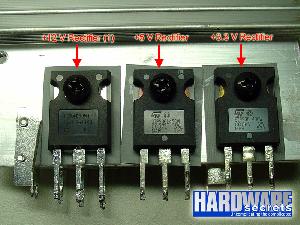
Figure 14: Rectifiers used on this power supply.
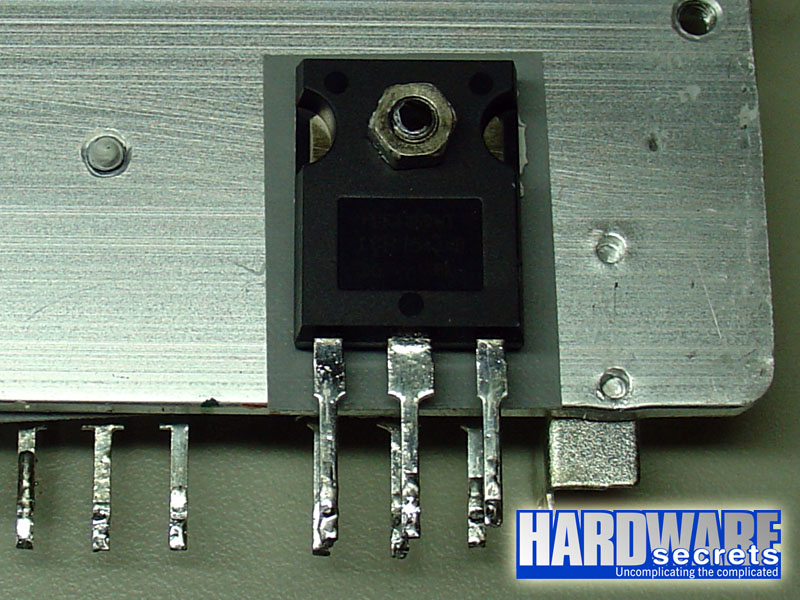
Figure 15: Second rectifier for the +12 V output.
This power supply also has a true temperature sensor attached to the heatsink used by the secondary rectifiers, in charge of controlling the fan speed according to the power supply temperature, which is a great feature to reduce noise, as the fan will rotate on its maximum speed only when needed.
Antec also chose to add a 7805 voltage regulator connecting the +12 V to the +5 V output, which is probably to simulate a load and allow the power supply to turn on.
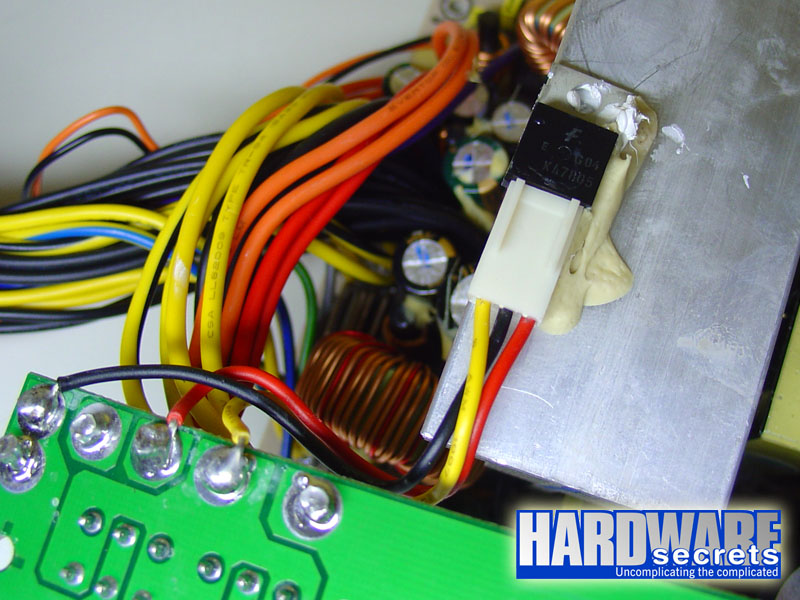
Figure 16: 7805 voltage regulator connected between the +12 V and +5 V outputs.
The electrolytic capacitor used on the active PFC circuit is from Japanese Chemi-Con, while all other electrolytic capacitors are from Taiwanese OST.