
NAS vs Cloud Storage for Security Cameras: Which Option Makes More Sense in 2026?
With the advancement of security camera technology, selecting the most suitable security camera storage system is as crucial as picking out the cameras in the first place. In today’s era, this is a question that’s shared amongst homeowners and businesses alike: store footage locally or in the cloud? It is crucial to understand the distinctions between the various types of NAS devices, NVR systems, and cloud platforms, ensuring optimal security, access, and long-term reliability. People searching for Sannce cloud storage, cloud recording and security camera backup solutions may come across situations where they’re comparing the storage solutions they have to choose from.
Local NVR Storage
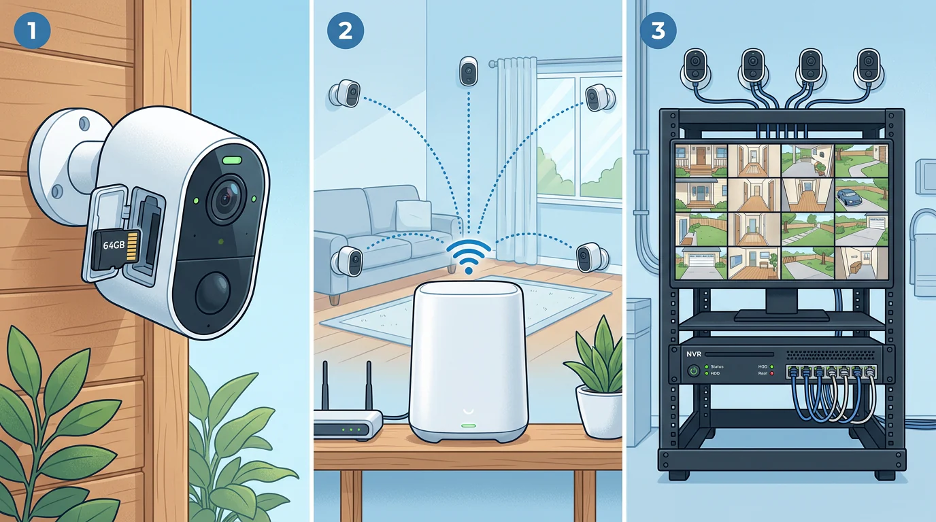
In 2026, one of the most popular storage types for surveillance systems is still Network Video Recorder (NVR). When using NVRs, recordings are kept on hard drives that are mounted in the recorder, so no internet connection is required to keep recording.
Advantages
Local NVR storage is very cost effective. Once the hardware is bought, there typically are no recurring subscription costs. This makes NVR systems appealing for people that have multiple cameras or vast properties. Other advantages include seamless recordings even in the event of an internet outage. Because all footage is stored locally, users will be able to keep shooting videos even without a good Internet connection.
From my experience with both small and residential surveillance systems, NVR systems always perform reliably for those who want continuous 24-hour recording and direct control over the footage.
Disadvantages
The first drawback of NVR storage is physical vulnerabilities. During a fire, if the recorder is lost, damaged or destroyed, valuable footage might be lost forever. There is also usually less flexibility in the way that remote is accomplished when compared to modern cloud-based solutions. Many manufacturers provide mobile viewing, but viewing in the past is less convenient with mobile platforms than with cloud platforms.
NAS-Based Recording
For more sophisticated surveillance applications, another increasingly popular solution is called Network Attached Storage (NAS). Unlike conventional NVRs, NAS systems can be used as video recording, file management and backup storage servers all in one.
Synology
One of the reasons why Synology NAS devices are very popular among security professionals is that they have all the intuitive software and have a strong surveillance app ecosystem. They are also designed to allow easy expansion with other cameras, making them suitable for expansion to accommodate a growing camera network.
QNAP
The enterprise-grade performance and advanced customization capabilities of QNAP are offered. QNAP is ideal for organizations with rigorous security needs, as users can set up a RAID array, virtual machines, and advanced backup plans.
Redundancy Benefits
Redundancy is one of the best features of recording with NAS. RAID setups can be used with multiple hard drives to provide data redundancy and minimize data loss in the event that one drive fails. In comparison to many standard NVR setups, this provides additional protection to make NAS systems more resilient.
But, NAS solutions typically comes with more technical expertise and have a higher initial investment price. It’s up to users to define storage pools, network settings and backup policies to achieve optimal results.
Cloud Storage for Security Cameras
Cloud technology has revolutionized the surveillance field, providing secure remote storage and easy access at any time, anywhere. Cloud storage for security cameras is becoming increasingly popular, thanks to the fact that Internet facilities have been improving across the world.
Remote Access
Cloud platforms are great at being accessible. Users can access live feeds, alerts of motion and then watch the archived footage, all without having to be directly connected to local hardware via their mobile phones. With the increasing rise of remote property management, this convenience has become crucial to the real estate industry.
Off-Site Backup
Cloud storage automatically backups at the same time making less reliance on local devices. Recordings are stored securely on cloud servers in case of hardware failures or any other unexpected problems. This capability adds to the overall business continuity and incident investigation.
Theft and Fire Protection
Protection from theft and physical disasters is one of the most compelling advantages of the cloud recording. For brands like Sannce, users are increasingly seeking out a cloud recording platform with remote access and offsite backups. Services based on Sannce cloud storage can assist in ensuring footage is still secure, even if local recording devices fail or get stolen.
The main disadvantage is the price of the subscription. Monthly or annual costs can add up, especially where archiving video at high resolution or keeping videos for longer periods of time are concerned.
Choosing a Storage Method Based on Camera Brand
Some surveillance manufacturers have different storage ecosystems; this must be taken into consideration for brand compatibility.
Hikvision
A hybrid recording strategy, such as simultaneous local NVR recording and cloud backup is frequently a cost-effective solution for Hikvision users. This approach is essentially one that is both affordable and offers better protection.
Dahua
Dahua systems often can be integrated with NAS and also provide compatibility with cloud services, enabling businesses to create their own storage structures to suit their needs.
Reolink
In the last couple of years, Reolink has added more cloud services, but continues to offer robust support for on-site storage solutions. It is flexible and is loved by those who need scalable storage solutions for their security cameras.
Sannce
With the rising need for disaster recovery, remote monitoring, and smartphone access, users are turning to cloud surveillance storage.The demand for remote monitoring, smartphone access, and disaster recovery is driving an increase in cloud surveillance storage. When combined with local recording systems, sannce cloud storage offers an extra level of protection, helping to ensure critical footage gets to its destination when it’s needed most.
Final Verdict
While cloud or NAS storage depends on budget, technical knowledge and security needs, it also relies on the individual’s storage requirements. Apart from the simple deployments, NAS solutions are cost-effective because they have advanced redundancy and control features, while cloud storage ensures maximum access and off-site protection. A blended solution, such as local recording along with cloud backup services like Sannce cloud storage, is the best of both worlds for most users in 2026, offering the most effective and future-proof surveillance strategies.