
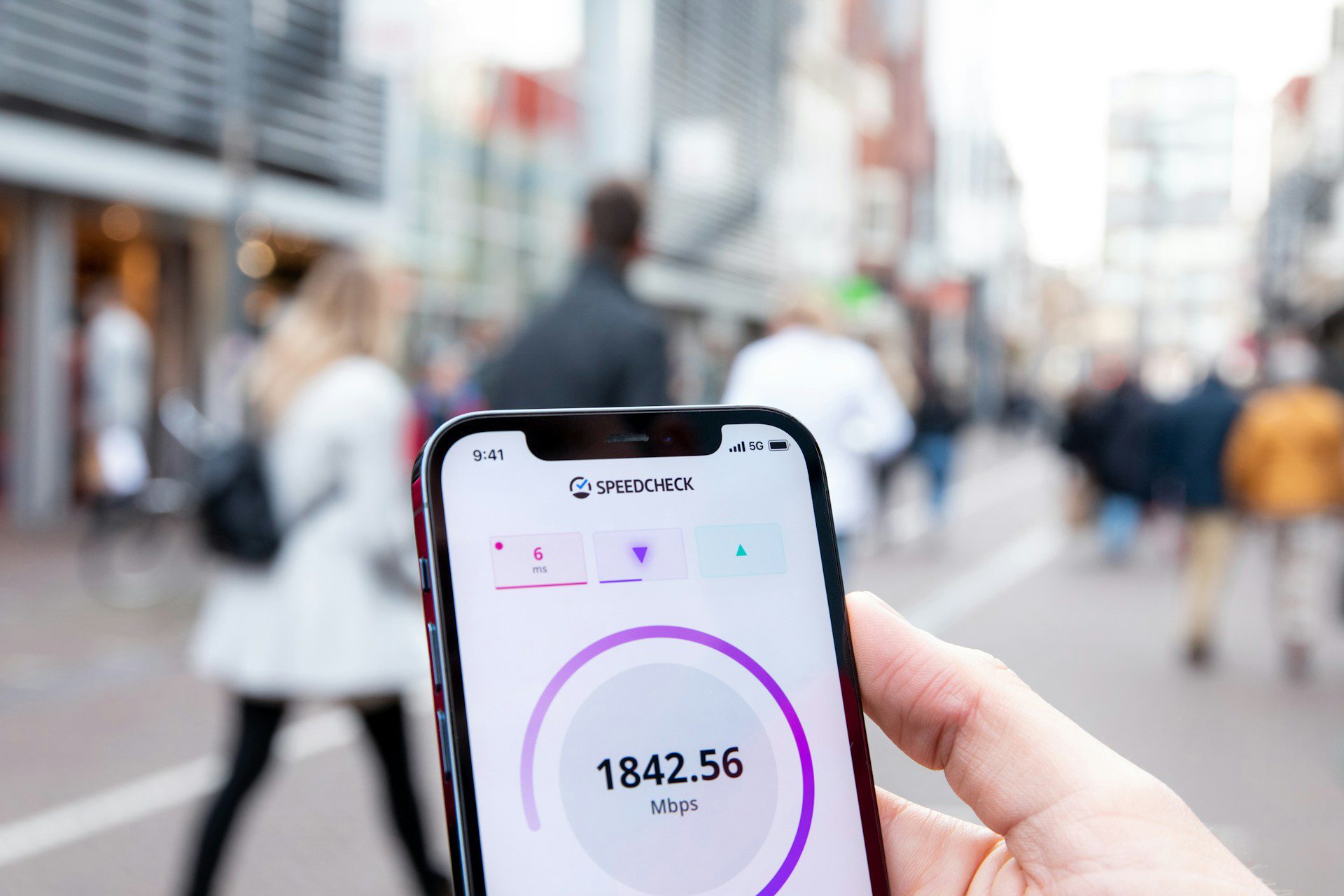
6G is Coming & It Can Be 500 Times Faster Than 5G
Researchers in Japan have conducted one of the earliest high-frequency data transfers for the future 6G standard, expected to hit the market sometime after 2030. Current 5G networks are up to 100 times more efficient than 4G, depending on conditions. Now 6G promises that it can be 500 times faster than today’s 5G connections.
5G: The Current Telecom Standard
Most mobile internet connections today use 4G and 5G, with 5G being a significant improvement over the former. Adopting a new standard can take a lot of resources, so 5G took some time to gain prominence following its 2019 release. As for what it can do, 5G holds speeds of 200 megabits per second with a testing maximum of 10 gigabits per second.
With more of life moving online, 5G aims to make mobile internet use faster and more efficient. This is crucial for both individuals but also businesses who increasingly rely on internet access, such as social media or iGaming sites that host digital games and services. 5G was made for an age where it’s possible to stream video or find online bingo to play using a smartphone or a similar handheld device – tech that was in its infancy in 2009 when 4G released.
5G’s focus on modern handheld devices shows in its other applications, namely integrated Internet-of-Things (IoT) support and machine-to-machine communication. This means 5G is the best standard when creating a smart home and can better facilitate automated/AI-powered functions between those smart appliances than previous standards. Following generative AI’s move into the mainstream in 2023, it’s one of many technologies alongside 5G adoption that are expected to level up digital economies across the globe.
6G: The Next Telecom Standard
Within every generation, there are subcategories like 5.25G or 5.5G as providers improve their service. However, the biggest leaps come when we move from one standard to the next. The move from 3G to 4G was relatively painless, though 5G adoption had been stymied by a higher infrastructural demand. For that reason, 5G isn’t going anywhere soon as it still needs to finish rolling out and making a profit for those who had invested in it.
So, when 6G is scheduled to drop in the late 2020s, don’t expect to get it day one. 5G will likely continue as the most popular standard for the next decade if not more, as 6G will slowly but undoubtedly become the next standard. There’s no set list of features yet, but it will be faster and provide increased support for AI, AR/VR, and edge computing. There is also a proposed ubiquitous connection that could support Wi-Fi and satellite internet connectivity, now that we are in a world where mobile searches vastly outnumber desktop and other hardware.
6G’s High-Speed Testing
It needs to be said that testing in isolated research environments is a far cry from real-life application, though a demonstration of improved speeds still carries over. For example, 5G can download at 20 Gbps during testing, but 100 Mbps to 200 Mbps in real life. This discrepancy is due to hardware, distance, and the fact you share the nearest tower with thousands of other people.
That said, 6G has blown previous 5G tests out of the water after Japanese researchers created the world’s first high-speed wireless device capable of 6G. Their tests involved sending data at 100 Gbps across a 328-foot space. That’s 20 times faster than 5G’s top speeds but, in reality, more than 500 times faster than the average 5G network in the USA. That means you won’t be able to casually download thousands of gigabytes in an afternoon when 6G drops, but the real-world improvement over 5G will still be noticeable and noteworthy.