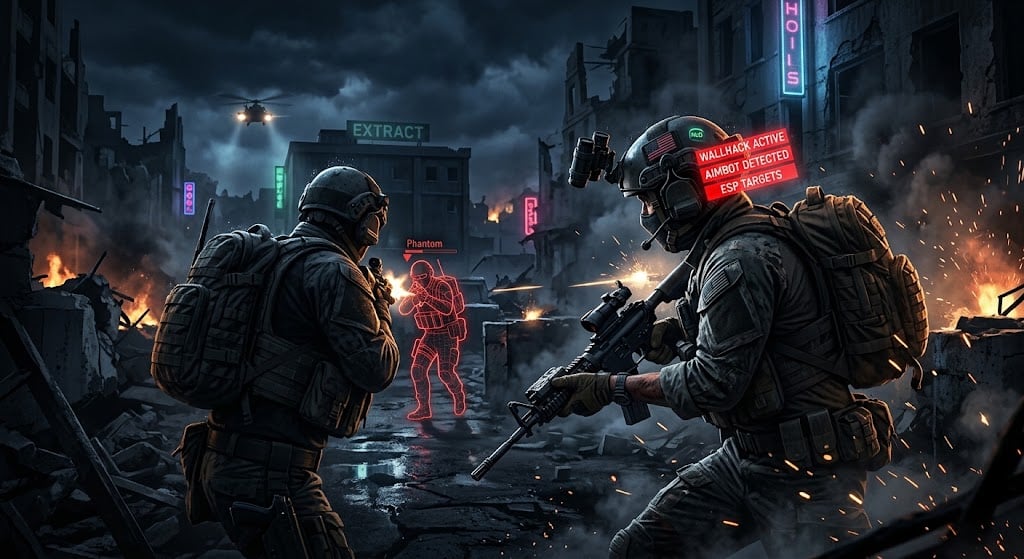
Why Extraction Shooters Have Become a Haven for Cheaters
Extraction shooters have taken the gaming world by storm. Titles like Escape from Tarkov, Arena Breakout Infinite, ARC Raiders, and Delta Force offer a unique blend of PvPvE action, where every decision matters and death carries a real cost. This high-stakes formula has attracted millions of players — but it has also created a perfect storm for cheaters. In 2026, cheating in extraction shooters is not just a nuisance; it’s an epidemic that threatens the very foundation of the genre.
This article explores why extraction shooters are so vulnerable to cheaters, the psychology behind cheating, and why even the best anti-cheat systems struggle to keep up.
The Mechanics of Extraction Shooters: High Risk, High Reward
To understand why cheating is so prevalent in extraction shooters, you first need to understand what makes these games tick. Unlike traditional multiplayer shooters where death means a quick respawn, extraction shooters are built around permanent loss. You bring gear into a raid, and if you die before extracting, you lose everything. Hours of progress, carefully collected loot, and expensive equipment can vanish in a single bullet.
This “high risk, high reward” design is what makes the genre so thrilling — and so frustrating. Every raid is a gamble. You might walk out with a fortune, or you might lose it all. The tension is palpable, and the stakes are real. But this same design also creates immense pressure. When the cost of failure is so high, the temptation to tilt the odds in your favor becomes almost irresistible for some players.
In Escape from Tarkov, for example, players spend hundreds of hours learning map layouts, understanding complex health systems, and managing ammunition types and armor durability. Success depends on situational awareness, map knowledge, and tactical decision-making. But the brutal learning curve can frustrate even veteran players who lose valuable gear to sudden ambushes. This frustration fuels demand for third-party tools that provide information or mechanical advantages that legitimate players cannot access.
The Psychology of Cheating in Extraction Shooters
Why do players cheat in extraction shooters? The reasons are as varied as the players themselves, but several common motivations stand out.
1. The Cost of Failure In most shooters, dying means a respawn and a reset — frustrating, but fleeting. In Tarkov, death steals hours of progress, irreplaceable keys, and the emotional attachment you’ve built to your gear. One player described losing a full weekend of grinding to a cheater in a split second. When the cost of failure is that high, some players rationalize cheating as a way to protect their investment.
2. The Desire for Power and Control Cheating provides a way to more thoroughly involve oneself in the game or exert more control over the game environment. ESP tools, aimbots, and radar hacks give players godlike awareness and precision, turning a frustrating experience into a power fantasy. For some, it’s not about winning — it’s about dominating.
3. Real-Money Trading (RMT) Perhaps the most significant driver of cheating in extraction shooters is the real-money economy. Players use cheats to farm valuable in-game items and currency, which they then sell for real money. This creates a thriving black market that incentivizes cheating on an industrial scale. According to one cheat developer, the primary motivation for most of his clients is financial gain, not just the thrill of cheating. These are not teenagers looking for a quick thrill — they are adults aged 18 to 40 who either struggle with the game or don’t want to spend time grinding.
4. Revenge and the “If You Can’t Beat Them, Join Them” Mentality Some players start cheating after being repeatedly killed by cheaters themselves. The frustration of losing gear to an obvious hacker can push even honest players over the edge. One cheat developer admitted that his journey into cheat development began after a cheater destroyed his base in Rust. It was less about revenge and more about technical curiosity — but the pattern is common. When the game feels unfair, some players decide to level the playing field by any means necessary.
5. Skipping the Grind Extraction shooters are notoriously grindy. Progression can take hundreds of hours, and many players simply don’t have that kind of time. Cheats offer a shortcut — a way to access high-tier loot and advanced equipment without the slog. For some, it’s about convenience rather than malice.
The Cheating Arsenal: ESP, Aimbots, and Radar Hacks
Cheaters in extraction shooters have a wide array of tools at their disposal. The most common and damaging are ESP (Extra Sensory Perception) overlays, which reveal enemy positions through walls, show the exact location of high-tier loot, and display opponent gear loadouts in real time. In Tarkov, this creates a massive economic imbalance, as cheaters vacuum up rare items before legitimate players can reach them.
Aimbots automatically lock onto enemies, making shots incredibly accurate. Some aimbots include features like smoother aim movement, recoil control, and the option to target specific body parts such as the head or legs. Wallhacks render enemies visible through surfaces, allowing players to track movement inside buildings or behind cover. Radar hacks go a step further by displaying nearby players on a separate minimap, sometimes on a second monitor.
For players seeking these advantages, there are platforms that offer such tools. For example, some providers offer an undetected escape from tarkov radar hack that promises to keep users ahead of the competition.
Why Aren’t Cheaters Banned?
Given the severity of the problem, you might wonder why cheaters aren’t simply banned. The answer is complex and involves several factors.
1. The Cat-and-Mouse Game Anti-cheat systems like BattlEye, which Tarkov uses, are constantly updated, but cheat developers are always one step ahead. Battlestate Games, the developer of Tarkov, relies on BattlEye, but cheat developers constantly update their tools to stay ahead. The arms race never ends. Even when a new anti-cheat measure is introduced, cheat developers quickly find ways to bypass it.
2. Private and Subscription-Based Cheats Public, free cheats are easy to detect and ban. But the real threat comes from private cheats — paid, subscription-based tools that are sold to a limited number of users. These cheats are carefully maintained and updated to avoid detection. As one forum user noted, people who don’t use obvious cheats like aimbots or flying hacks almost never get banned, and you will almost never notice them in game. Private cheats have a small user base and are designed to fly under the radar.
3. DMA Hardware Cheats The cutting edge of cheating technology is Direct Memory Access (DMA) hardware. These external devices read game memory directly from the PCIe bus, bypassing kernel-level anti-cheat entirely. DMA cheats are almost impossible to detect with software alone. They can provide real-time information about player positions, health, equipment, loot, and extraction points. Some DMA systems even include memory writing capabilities that can modify game behavior for advantages such as reduced recoil or enhanced visibility. While some developers have introduced countermeasures like DMA-Hunter, which detects and blocks DMA-based hardware cheats, the battle is far from over.
4. “Legit” Play and Smart Cheating Many cheaters don’t use obvious hacks. They use ESP or radar hacks to gain information without demonstrating superhuman aim. They play “smart” — avoiding detection by never snapping to targets through walls or landing impossible shots. This makes them incredibly hard to spot, even for experienced players. They might use a safe arena breakout infinite radar cheat that provides information without altering their gameplay visibly. As long as they don’t make obvious mistakes, they can cheat for weeks or months without being banned.
5. HWID Spoofers and Account Farming Even when cheaters are caught, they often return. Hardware ID (HWID) bans can be bypassed with spoofers, and new accounts are cheap and easy to create. Battlestate Games has banned tens of thousands of accounts in single waves, but the cheaters simply buy new accounts and continue. In the first quarter of 2026 alone, Tarkov banned about 25,000 accounts — but only 54% were for actual cheating. The rest were banned for other violations like real-money trading. This suggests that cheating is even more widespread than the ban numbers indicate.
The Impact on the Community
The cheating epidemic has a devastating effect on the community. In games like Arena Breakout Infinite, players have reported that cheating is so widespread that it feels like the majority of matches have a cheater in them. Reports go unanswered, bans appear inconsistent, and no compensation is offered for gear lost to obvious cheaters. The integrity of the gameplay loop is severely damaged.
In Tarkov, the situation is similarly dire. One YouTuber found what he believed were “obvious” cheaters in 60% of the matches he analyzed. Streamers like Shroud and Summit1G have had their streams become highlight reels of blatant cheaters, not because they’re unlucky, but because the anti-cheat is simply not up to the task. The community’s trust is eroding, and many players are quitting in frustration.
Conclusion
Extraction shooters are a brilliant evolution of the multiplayer shooter genre, offering tension, risk, and reward like no other. But their very design — high stakes, permanent loss, and valuable loot — makes them a magnet for cheaters. The psychology of cheating, the sophistication of modern cheat tools, and the financial incentives of real-money trading create a perfect storm that even the best anti-cheat systems struggle to contain.
While developers are fighting back with kernel-level drivers, AI-driven behavior analysis, and hardware-level detection, the battle is far from won. The cheat economy is a multi-million-dollar industry, and as long as there is demand, there will be supply. For players, the message is clear: be vigilant, report suspicious activity, and remember that cheating doesn’t just ruin the game for others — it ultimately ruins the game for everyone, including the cheaters themselves.
The future of extraction shooters depends on finding a balance between the thrill of risk and the assurance of fairness. Until then, the war against cheaters will continue — and it’s a war that every player has a stake in.