How Precision Machining Service Shapes High-End PC Cooling: Copper Heatsinks, Cold Plates and Aluminum Chassis
High-performance PCs generate substantial heat, especially when equipped with powerful CPUs, GPUs, and other demanding components. As processors become faster and more compact, cooling systems must remove heat efficiently while fitting within increasingly precise design constraints. This is where a precision CNC machining service becomes valuable. CNC machining allows manufacturers to produce copper heatsinks, liquid-cooling cold plates, and aluminum chassis components with accurate dimensions and complex geometries.
For high-end PC cooling, performance is not determined only by fans or pumps. The quality of the metal components that transfer and dissipate heat can have a significant impact on thermal performance, reliability, and overall system design.
The Importance of Precision in PC Cooling
Thermal components need accurate contact with the surfaces they are designed to cool. Even small dimensional variations or imperfections can affect how effectively heat moves from a processor or graphics component into a heatsink or cold plate.
Precision CNC machining provides controlled manufacturing for components that require tight tolerances, flat surfaces, mounting holes, channels, fins, and other detailed features. Modern machining processes can support complex geometries while maintaining consistent dimensions across prototypes and production batches.
For example, Chiheng Hardware states that its precision CNC machining capabilities can achieve tolerances down to ±0.005 mm, depending on the material, design, and manufacturing requirements. Its capabilities include 3-axis, 4-axis, and 5-axis machining, as well as CNC milling and turning.
Copper Heatsinks for Efficient Heat Transfer
Copper is widely valued in thermal-management applications because of its strong thermal conductivity. In high-end PC cooling, copper can be used for heatsink bases, heat spreaders, and other components where efficient heat transfer is important.
A CNC-machined copper heatsink can be manufactured with carefully controlled dimensions and customized fin structures. These designs can increase the surface area available for transferring heat to surrounding air. CNC machining is particularly useful when a cooling component requires custom dimensions that are not available from standard heatsink products.
However, copper can be more challenging and costly to machine than aluminum. This makes manufacturing precision and efficient material utilization important considerations when designing custom copper cooling components.
Cold Plates and Liquid Cooling
Liquid cooling systems rely on cold plates to transfer heat from a high-temperature component into a circulating coolant. A cold plate typically contains internal channels or passages designed to control coolant flow across the heat-generating area.
Precision machining makes it possible to create customized channels, mounting features, pockets, and sealing surfaces. Depending on the application, copper or aluminum can be selected according to thermal, weight, structural, and cost requirements. Custom CNC-machined cold plates are already used in demanding electronics and thermal-management applications.
For PC applications, accurate machining is particularly important around the contact surface. A well-controlled interface helps the cold plate sit correctly against the component or heat spreader, while precisely machined channels can support the intended liquid-flow design.
Aluminum Chassis: Cooling and Structure in One Component
The PC chassis does more than protect internal hardware. Aluminum can also contribute to thermal management because the enclosure itself can be designed to help spread and dissipate heat.
CNC machining allows manufacturers to produce aluminum chassis parts with ventilation openings, mounting points, cable-routing features, recessed areas, and integrated heatsink structures. This is especially useful for premium PCs, compact workstations, industrial computers, and fanless systems where space and aesthetics are important.
Aluminum alloys such as 6061 are commonly considered for machined electronic enclosures because they offer a useful balance of strength, weight, machinability, and appearance. CNC machining can also be combined with finishes such as anodizing, brushing, polishing, and sandblasting. Chiheng lists these and other finishing options for its precision-machined components.
Why CNC Machining Matters for High-End PC Designs
One of the biggest advantages of CNC machining is design flexibility. Engineers can move beyond standardized cooling components and develop parts around a specific motherboard, GPU, processor, or enclosure.
Five-axis machining can be particularly useful for complex geometries because multiple surfaces can be machined with fewer setups. This can help manufacturers produce complicated components while maintaining dimensional consistency.
Precision manufacturing also supports rapid prototyping. PC cooling products often go through several design iterations before reaching final production. A manufacturer capable of handling prototypes and larger production runs can help reduce the need to redesign manufacturing processes when a product moves from testing to commercialization.
Surface Finishing and Long-Term Performance
Surface finishing can serve both functional and aesthetic purposes. Anodizing can provide aluminum components with a durable surface, while brushing or polishing can create a premium appearance. Other processes, such as plating or sandblasting, may be selected according to the component’s specific requirements.
For high-end PC builders and manufacturers, appearance matters almost as much as thermal performance. Visible heatsinks and aluminum chassis components are often part of the overall product aesthetic, particularly in premium gaming PCs and enthusiast systems.
Choosing the Right Precision Machining Partner
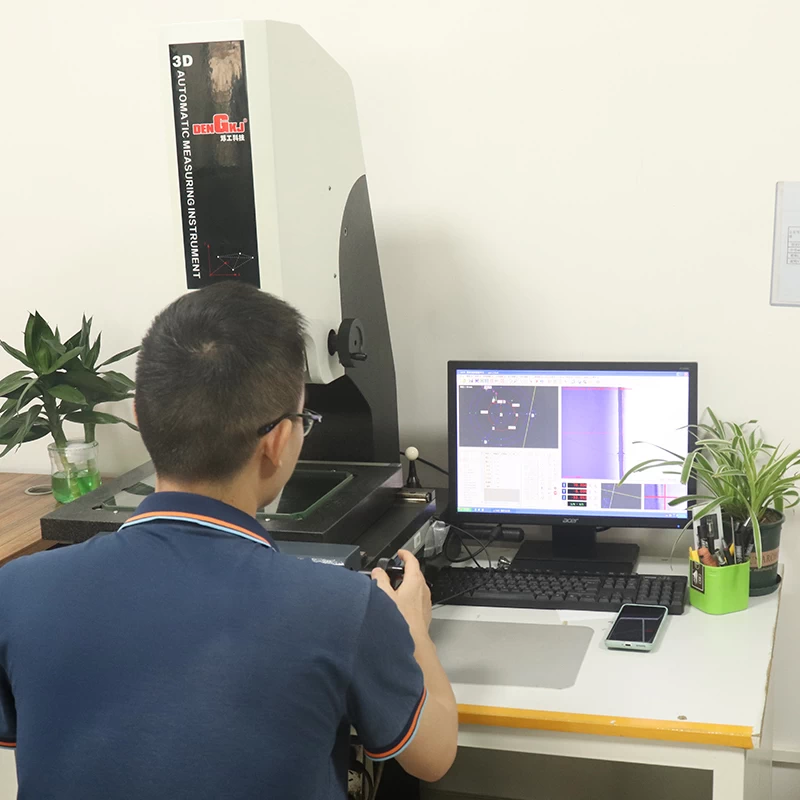
When developing custom PC cooling components, manufacturers should consider more than machining price. Material capabilities, dimensional inspection, production consistency, surface finishing, prototype support, and engineering communication can all affect the final product.
Chiheng Hardware offers CNC milling, CNC turning, 5-axis machining, copper and aluminum machining, inspection equipment, and ISO 9001 quality-management processes. These capabilities can support projects ranging from individual prototypes to production quantities.
Ultimately, high-end PC cooling depends on the entire thermal system working together. Fans, pumps, radiators, thermal interfaces, heatsinks, cold plates, and chassis components all have their roles. Precision machining provides the manufacturing foundation that allows these components to be produced accurately and customized for demanding applications.
As PC hardware continues to become more powerful, precision-engineered copper heatsinks, liquid-cooling cold plates, and aluminum chassis designs will remain important tools for achieving efficient thermal management without sacrificing performance, reliability, or design quality.