How Is Technology Making Health Management More Accessible?
Gone are the days when health management meant doctors’ visits, generalized health approaches, or curative treatments. Now, people are empowered to manage their mental and physical health with access to smart health technology, apps, AI models, and more.
But how far have artificial intelligence and digital health devices revolutionized ongoing care and diagnosis? In this piece of writing, learn the role of health technology in achieving a better quality of life with accessible medical facilities.
The Role of Digital Health in Modern Healthcare
Technological advancements are reshaping patient care, shifting healthcare from treatment to successful prevention and personalization. Here are some remarkable improvements in the medical world:
Proactive Patient Handling with Continuous Monitoring
Digital health tools are now replacing manual checks of vital signs every other hour at home or in care units. Doctors and specialists can evaluate the patient’s condition remotely for chronic diseases and other complications.
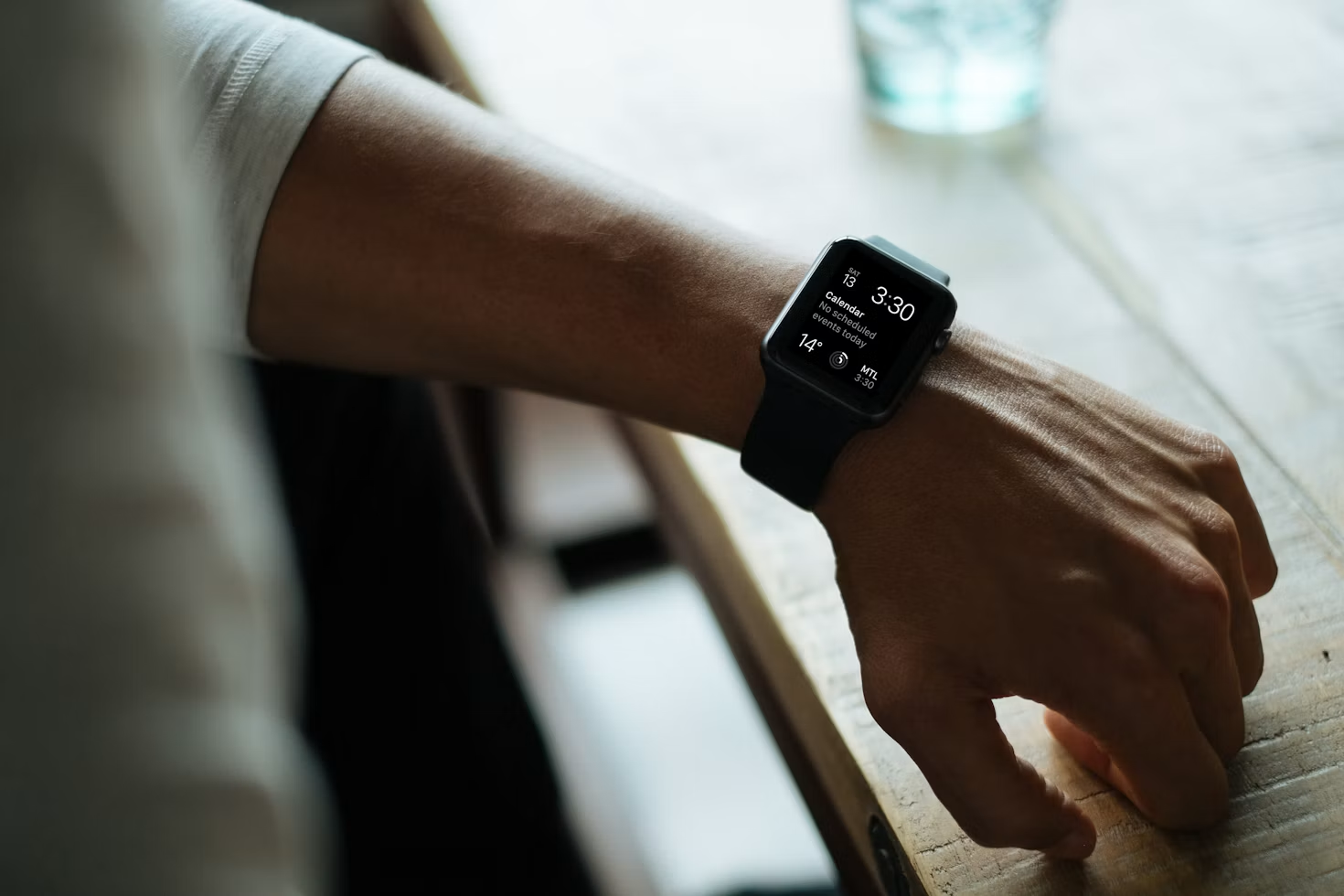
Smart wearables with advanced sensors provide health data on key metrics such as heart rate, respiratory rate, blood oxygen, and blood pressure. Such remote monitoring helps prevent emergencies by highlighting abnormalities early, enabling proactive treatment before the situation gets worse.
Healthy Lifestyle Adjustment with Mobile Health Apps
A healthy lifestyle with healthy food choices and adequate sleep hours is a basic requirement for a long health span. Different apps let you stay motivated to follow a health regimen, such as daily step count, calorie intake, sleep duration, etc. They keep notifying you about bad food choices, sedentary lifestyles, or poor sleep patterns. With this awareness, it becomes easier to stick to a healthy lifestyle through real-time feedback and reminders.
Wearable Devices for Timely Interventions
Smart wearables are now part of a continuous monitoring and tracking routine for optimal mental and physical functioning. These wearables are like health apps that help you stay motivated and improve your overall health by identifying minor or early risk factors.
For example, smart wearables can maintain sleep hygiene by tracking sleep patterns over time, sleep and wake-up time consistency, and total duration. When sleep time is inconsistent, you can adopt early interventions in the form of complementary therapies such as herbal teas, calming gummies, meditation, etc., depending on the symptoms. Timely action can lead to faster results without relying on medication or complex treatments.
24/7 Access to Medical Care with Telehealth
The use of different telecommunications technologies eliminates the gap between patients and healthcare practitioners. Without leaving your space, you can get your diagnostic test reports interpreted by specialists. Or you can have online consultations about your current body conditions through video conferences. Even now, surgeons can perform operations without physical presence through robotic surgery enabled by telehealth advancements.
Effective Results with Personalized Health Approaches
In the past, general healthcare practices were considered for chronic and acute conditions, where they may or may not work. This is because how our body reacts and responds to any medication or treatment varies with factors such as genes, metabolism, lifestyle, environment, etc.
To get personalized treatment, you need genetic testing or detailed health records, which are not within everyone’s reach. But now, thanks to AI models that find patterns and correlations in large health data, you can get personalized treatment regimens.
Advancements in Preventative Healthcare
In the past, you got treatment when already sick, but now AI models revolutionize healthcare practices. Artificial intelligence models evaluate your personal data and diagnostic tests to identify patterns. This evaluation helps predict possible health risks and recommend prevention steps. Evaluating large data and identifying patterns for health risks is possible with machine learning. Even if you are perfectly healthy at present, AI health tools can predict possible future complications based on your current body vitals.
Bottom Line
Technological advancements are revolutionizing the medical field, empowering the general public with more accessible health management. From remote monitoring and personalized treatments to AI-based pre-diagnosis, the chances of successful treatment and prevention are now higher than ever.
No doubt, technologies make health management more accessible, but they also come with some limitations. AI systems have security concerns, while the evaluated insights cannot be 100% accurate or reliable. Therefore, a combined approach that combines artificial intelligence with human input can provide the most effective solutions.